
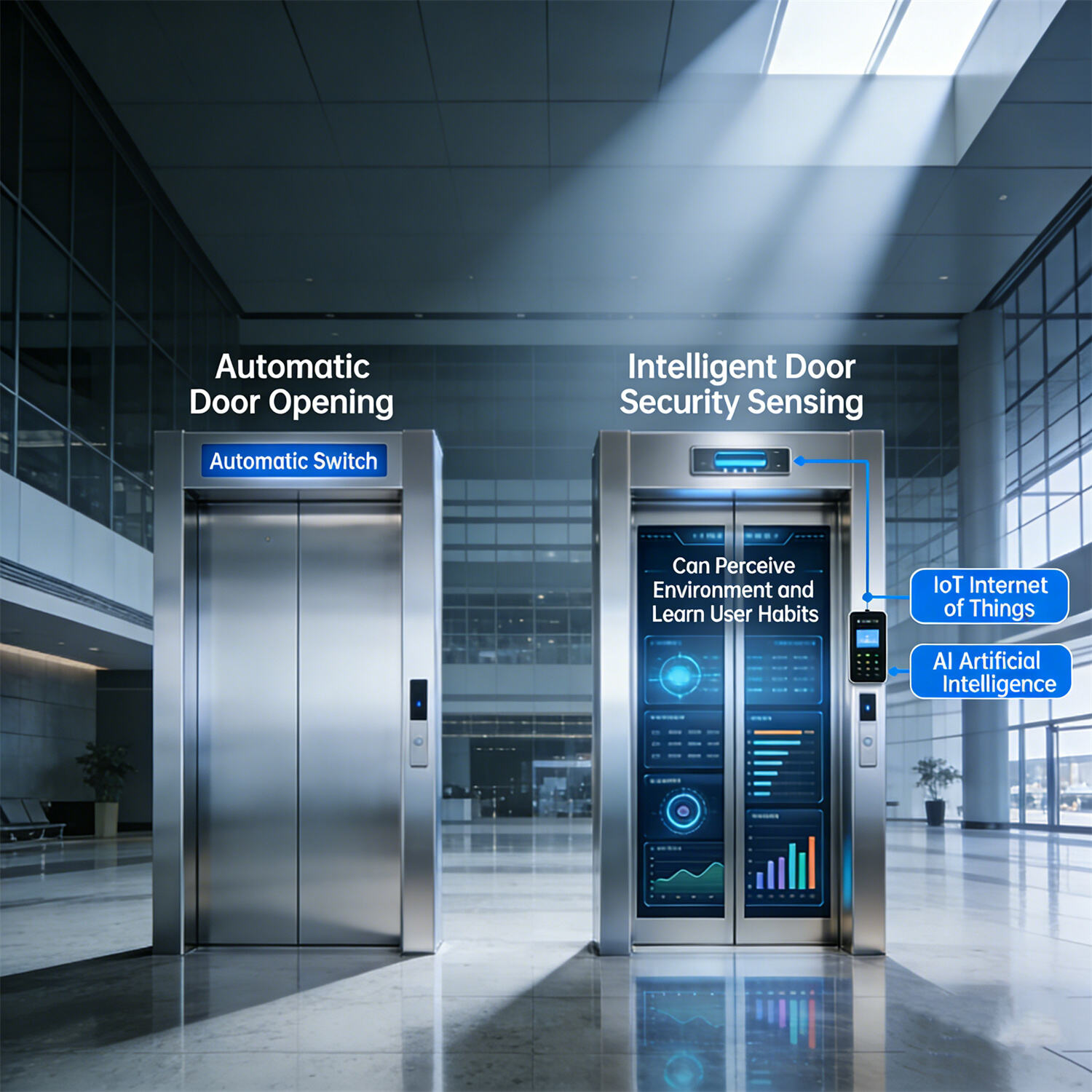
The automatic door technology is undergoing a profound transformation. Traditional automatic doors merely achieved the basic function of "automatic opening and closing", while the new generation of intelligent door control systems, through Internet of Things (IoT) and Artificial Intelligence (AI) technologies, have upgraded doors from passive mechanical devices to active, perceptible, and learning intelligent nodes. This transformation not only brings revolutionary efficiency improvements to building operation and management, but also opens up new possibilities for safety, energy efficiency, and user experience. This article will delve into the core application scenarios of IoT and AI in the automatic door field and the practical value they bring to B-end customers.
From "Automatic" to "Intelligent": Paradigm Shift
The working logic of traditional automatic doors is very simple: the sensor detects someone approaching, the controller commands the motor to open the door, and it closes after a delay. This process is isolated and passive, as the door does not know "who" is passing through, is unaware of its own "health status," and cannot "communicate" with other systems in the building.
The smart access control system integrating IoT and AI has revolutionized this paradigm:
| Dimension | Automatic door | IoT/AI intelligent gate control system |
| connectivity | Running in isolation without network connection | Connect to the cloud via Wi-Fi/4G/5G for remote management |
| sensing capability | Detect movement only (with/without) | Recognize faces, analyze crowd flow direction, and assess crowding levels |
| data capability | No data records | Track real-time traffic data, operational status, and energy consumption |
| Maintenance mode | passive maintenance | Predictive maintenance (AI predicts failures and intervenes in advance) |
| system integration | autonomous system | Deep integration with BMS, HVAC, security, and fire protection systems |
| management style | Manual adjustment required on-site | Remote monitoring, remote configuration, remote diagnosis |
Core Application Scenarios
1. Remote Monitoring and Management
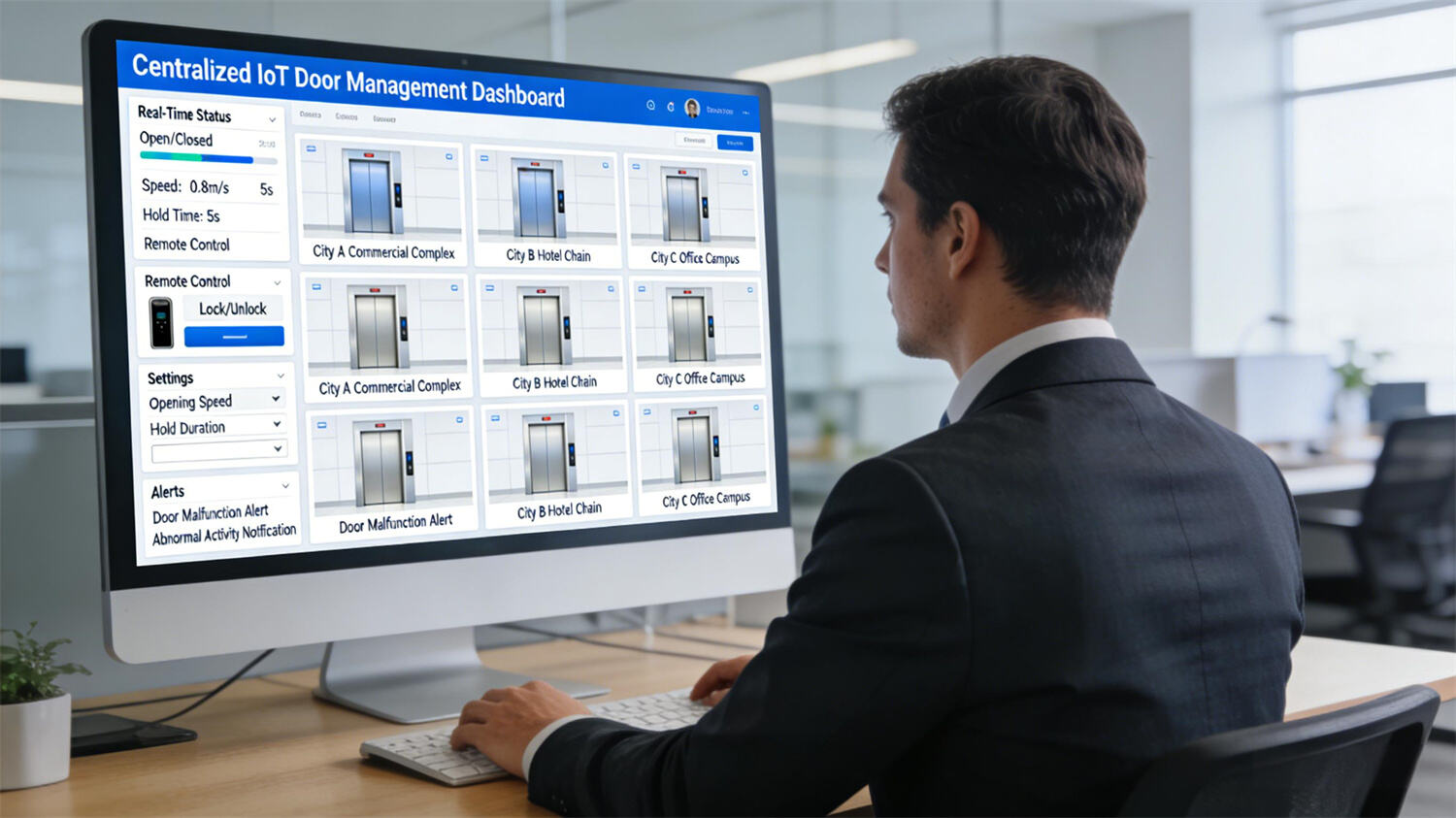
Through the IoT platform, property managers can monitor the operational status of all automatic doors in real time on a unified digital dashboard, whether the doors are located on different floors of the same building or across multiple projects in different cities. Administrators can remotely perform the following operations:
• View the open/closed status and operating parameters of each door in real time.
• Remote lock or unlock specific access points.
• Remote adjust the opening speed, hold time and other parameters of the door.
• Receive real-time fault alarm and abnormal notification.
This represents a qualitative leap in operational efficiency for businesses managing chain hotels, large commercial complexes, or distributed office spaces.
2. Predictive Maintenance
This represents the most revolutionary application of AI in the field of automatic doors. Traditional maintenance models either follow a "repair after failure" (passive repair) approach or adopt "periodic inspection" (preventive maintenance). AI-driven predictive maintenance, however, takes this a step further:
The system continuously collects operational data including motor current, vibration frequency, operational cycles, and switch times. By analyzing trends and anomaly patterns in this data, the AI algorithm can issue warnings weeks or even months before actual failures occur. For instance, when the AI detects a gradual increase in motor current consumption, it can determine that the belt is wearing out and automatically generate a maintenance ticket, alerting technicians to replace the belt during the next routine inspection.
The value of predictive maintenance lies in transforming unplanned downtime into scheduled maintenance. For high-reliability environments such as hospitals, airports, and data centers, the significance of this capability is immeasurable.
3. Deep integration with Building Management System (BMS)
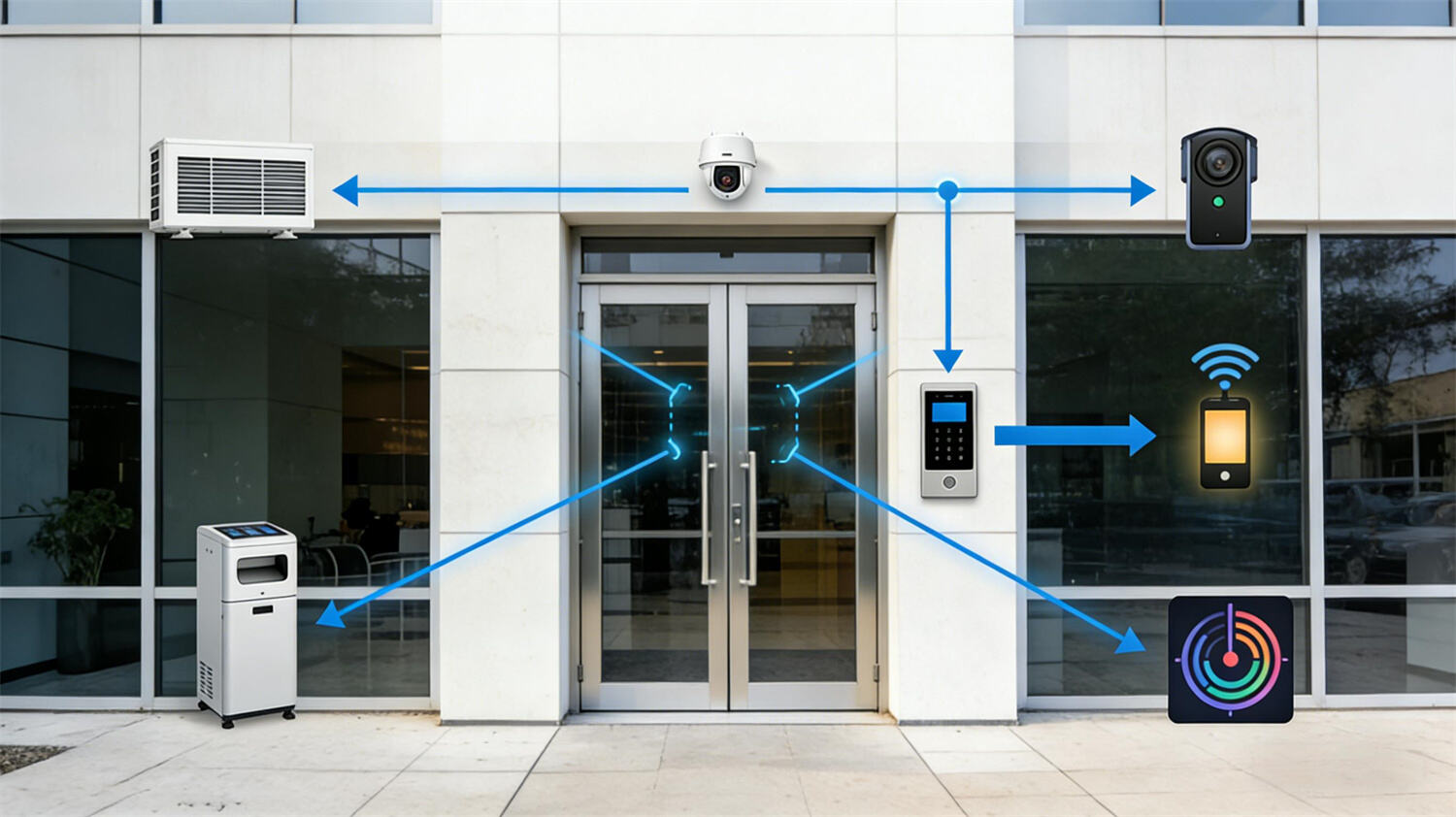
The intelligent access control system is no longer an isolated entity. As a pivotal node in the smart building ecosystem, it facilitates real-time data exchange and seamless collaboration with other systems.
• Integrated with HVAC: When doors remain open for extended periods, the system automatically adjusts airflow to prevent energy waste.
• Integrated with security systems: automatically locks all entry/exit points during security incidents, and opens all evacuation routes when a fire alarm is triggered.
• Intelligent lighting control: automatically adjusts the brightness of entrance areas based on door status and foot traffic.
• Integrated with the foot traffic analysis system: Provides retailers with precise customer flow data to optimize store layouts and marketing strategies.
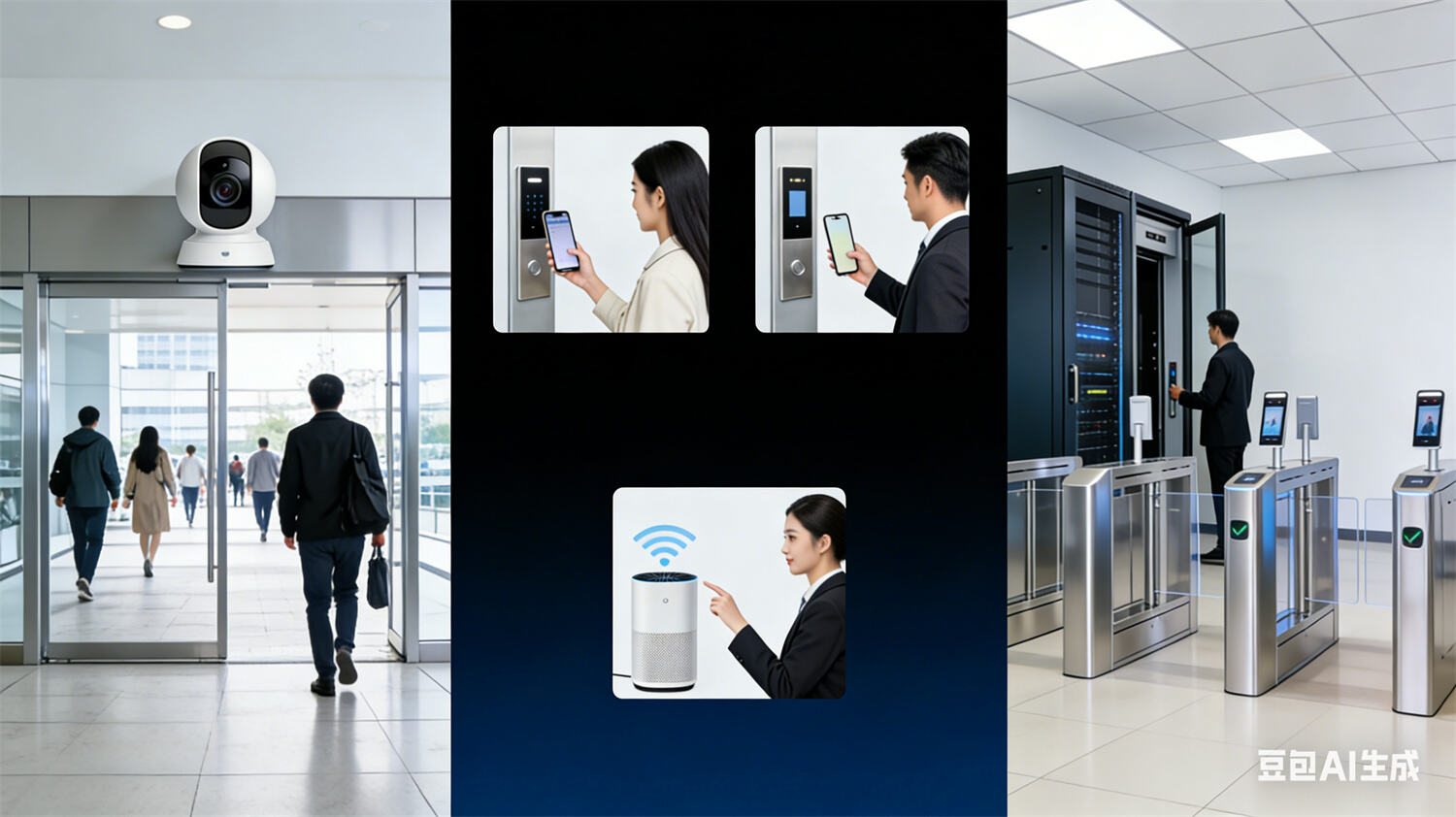
4. Smart Access Control and Identity Recognition
IoT enables automatic doors to integrate multiple advanced authentication technologies, enabling refined access control management.
• Facial recognition: Authorizes personnel and opens doors automatically through camera recognition without physical credentials.
• Mobile credential: Use your smartphone as a smart card for access control via Bluetooth or NFC technology.
• RFID/IC cards: a traditional yet reliable contactless access control solution.
• Voice control: Control door opening and closing with voice commands through integration with smart speakers or voice assistants.
The integrated application of these technologies enables customized access control policies for zones with varying security requirements, ranging from unrestricted public lobby access to multi-factor authentication in core server rooms.
strategic value to B-side customers
For building owners, property management companies, and project developers, the benefits of investing in smart access control systems go far beyond mere convenience.
1 Reducing Total Cost of Ownership (TCO): Predictive maintenance cuts emergency repair costs and unplanned downtime losses, while smart energy-saving features lower long-term electricity expenses.
2 Boosting asset value: Buildings with smart access control systems gain a competitive edge in green certification and rental markets.
3 Enhance security compliance: Automated security audits and log recording streamline compliance procedures and reduce legal risks.
4 Enhanced user experience: A seamless, personalized flow experience boosts satisfaction for both tenants and visitors.
OUTUS's vision of intelligence
OUTUS is actively embracing the wave of intelligentization. Our next-generation products will deeply integrate IoT and AI capabilities, offering global clients not just a 'door,' but a complete 'smart access solution.' We believe that future building entrances will be intelligent, interconnected, and predictable, and OUTUS will be the driving force behind this transformation.
Contact our technical team to discover how the OUTUS smart gate system can empower your next project.


 EN
EN