
Industrial doors are essential infrastructure in modern factories, warehouses, logistics centers, and commercial facilities. Unlike commercial automatic doors, which focus on aesthetics and user experience, the core requirements for industrial doors are speed, durability, safety, and environmental separation. Choosing the right industrial door directly impacts a company's operational efficiency, energy costs, and workplace safety. This article systematically introduces three of the most prevalent types of industrial doors—High-Speed Doors, Industrial Roller Shutters, and Garage Doors—to help facility managers and procurement decision-makers make optimal choices.
Core Considerations for Industrial Door Selection
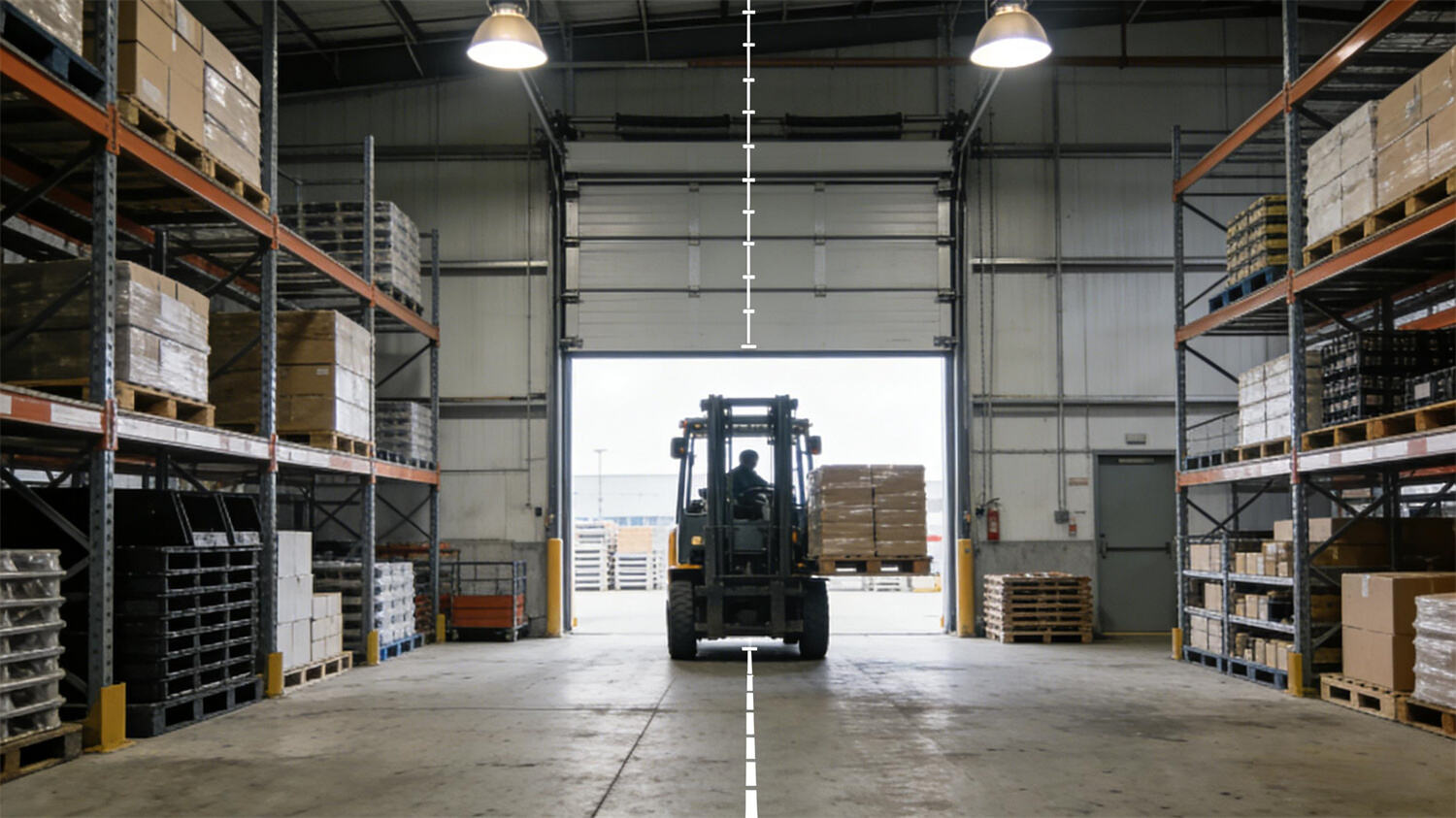
Before selecting a specific door type, it is necessary to clarify the following key application requirements:
1. Traffic Frequency: How many open/close cycles are needed per day? High-frequency scenarios (e.g., logistics sorting centers) require faster opening speeds and higher durability.
2. Objects Passing Through: Will it be personnel, forklifts, or large vehicles? This determines the door size and clearance height.
3. Environmental Separation Needs: Is there a need to isolate temperature (e.g., cold storage), dust, noise, or odors?
4. Security Level: Are anti-theft, fire-resistant, or explosion-proof features required?
5. Installation Space: Is there sufficient space above and on the sides of the opening for installation?
In-Depth Comparison of Three Major Industrial Door Types
| Core parameters | High-Speed Doors | Industrial Roller Shutters | Sectional Overhead Doors |
| Opening speed | Extremely fast (1.0-2.5 m/s) | Medium (0.2-0.5 m/s) | Medium (0.2-0.4 m/s) |
| Closing speed | Extremely fast (0.5-1.5 m/s) | Medium | Medium |
| Durability (number of cycles | Extremely high (500,000-1,000,000 times per year) | High (50,000-100,000 times per year) | Medium (20,000-50,000 times per year) |
| Thermal insulation and heat preservation | Medium (depending on the material of the curtain) | Good (double-layer steel plate + polyurethane filling) | Good (double-layer steel plate + polyurethane filling) |
| Anti-theft security | Lower (The door curtain is usually a PVC soft curtain | Extremely high (steel door curtain | High (steel door panel |
| Wind resistance | Medium | Extremely high | high |
| Applicable scenarios | Logistics, food, pharmaceuticals, cleanrooms | Warehouses, factories, shops, garages | Fire stations, warehouses, commercial garages |
| Initial cost | Higher | Lower | Medium |
1. High-Speed Doors: The Pursuit of Ultimate Speed and Efficiency
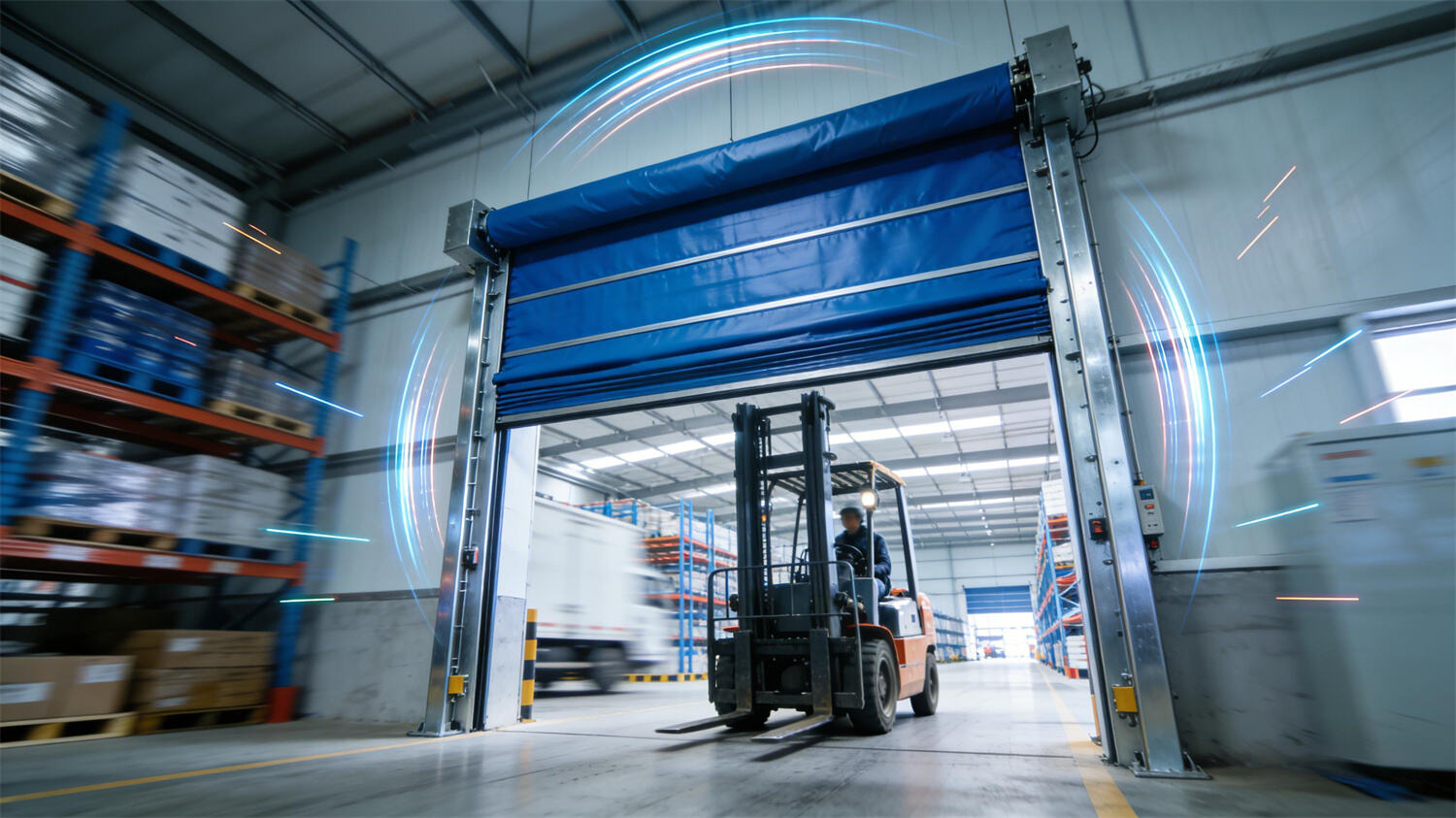
High-speed doors are the "high-performance sports cars" of the industrial door world. Their core advantage lies in exceptionally fast opening and closing speeds, typically ranging from 1 to 2.5 meters per second. This makes them excel in scenarios requiring frequent traffic and strict environmental control.
Typical Applications:
- Logistics and Warehousing: In sorting centers and distribution warehouses, frequent entry and exit of forklifts and personnel require doors to open and close in the shortest possible time to maintain operational rhythm.
- Food and Pharmaceutical: In production environments with strict requirements for temperature, humidity, and cleanliness, high-speed doors minimize the time the opening is exposed, effectively isolating different temperature zones or clean areas.
- Cold Chain Logistics: At cold storage entrances, the rapid operation of high-speed doors significantly reduces cold air loss and lowers the energy consumption of refrigeration systems.
Key Technical Features:
High-speed doors typically use flexible curtains made of PVC or composite materials, rolled up and down quickly by high-speed motors and precision control systems. Advanced high-speed doors also feature automatic reset functions—if the curtain is accidentally dislodged from the guide rails by a forklift, the system can automatically reinsert it without manual intervention, greatly reducing downtime.
2. Industrial Roller Shutters: Sturdy and Reliable Security Barriers
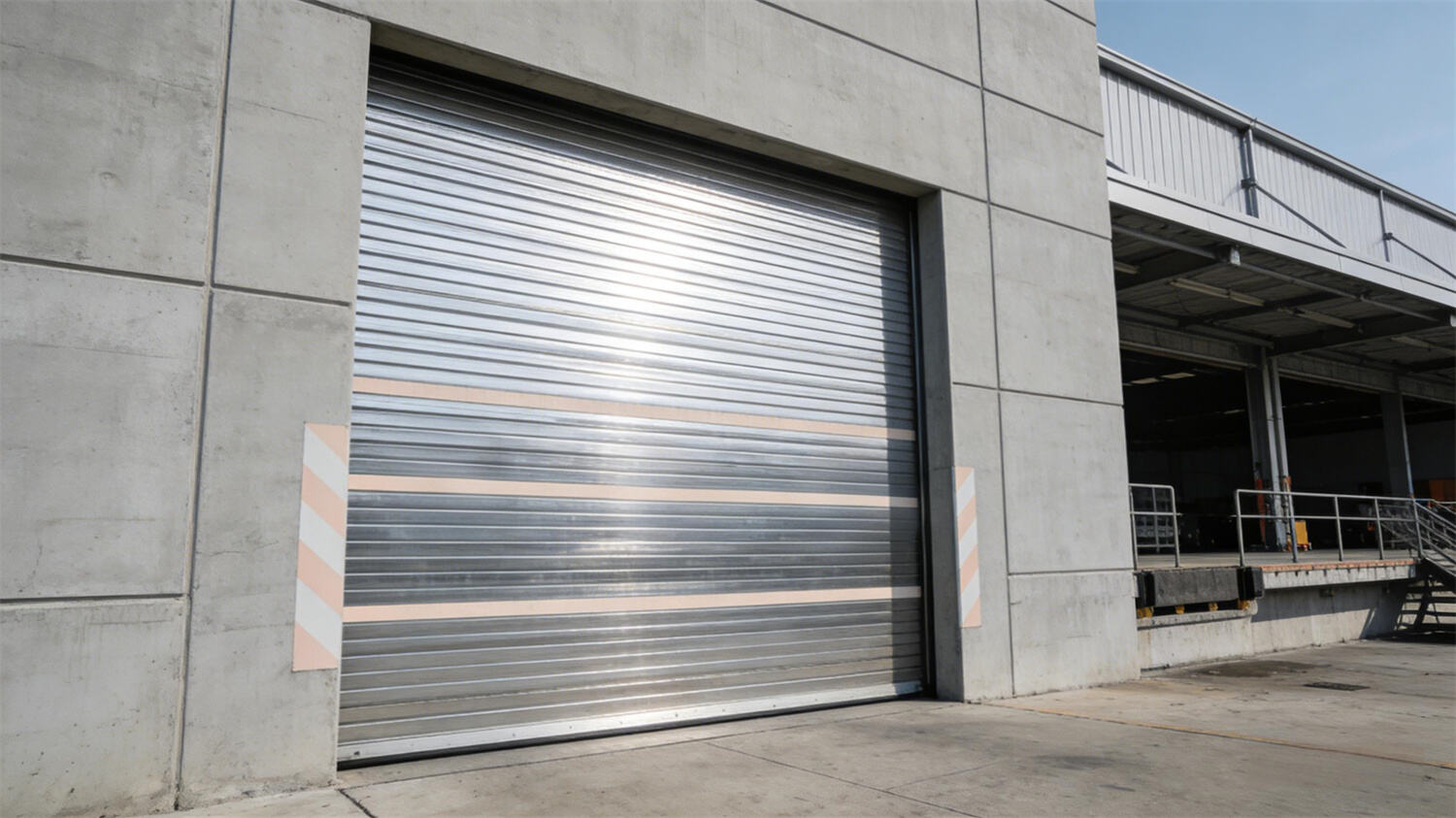
Industrial roller shutters are the most classic and widely used type of industrial door. They consist of a series of interlocking steel or aluminum slats, rolled up around a shaft above the opening by a motor. Their core advantages lie in superior physical security and environmental protection capabilities.
Typical Applications:
- Factories and Warehouses: Serving as external entrances, providing reliable protection against theft, wind, and rain.
- Retail Stores: Providing security for storefronts during non-business hours.
- Parking Garages: Used for entry/exit control in underground or surface parking areas.
Key Technical Features:
Double-layer steel slats filled with polyurethane foam provide good thermal and acoustic insulation. High-end models can also be equipped with fire-resistant features (meeting specific fire rating standards), automatically closing in case of fire to help prevent its spread.
3. Sectional Overhead Doors: Versatile Space Managers
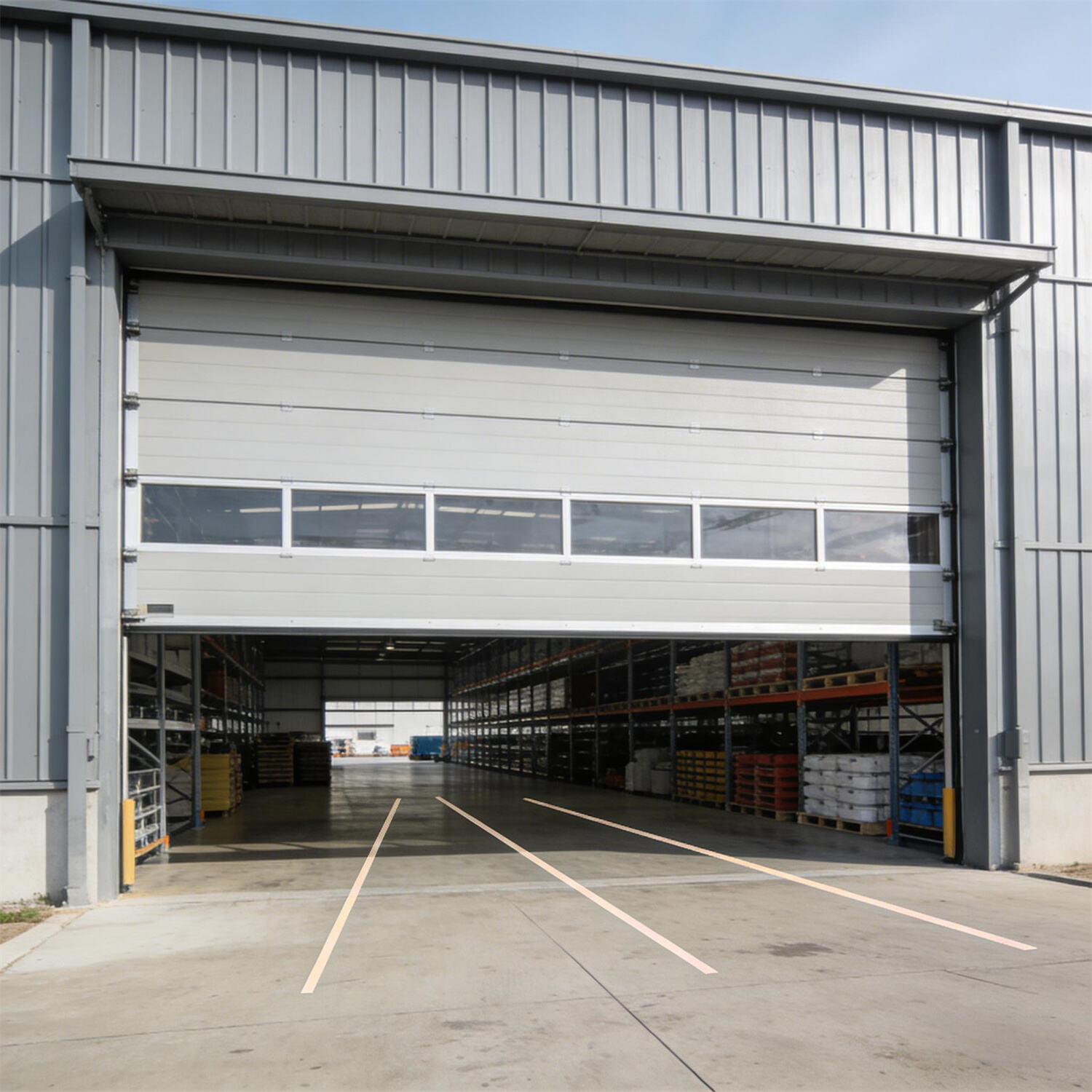
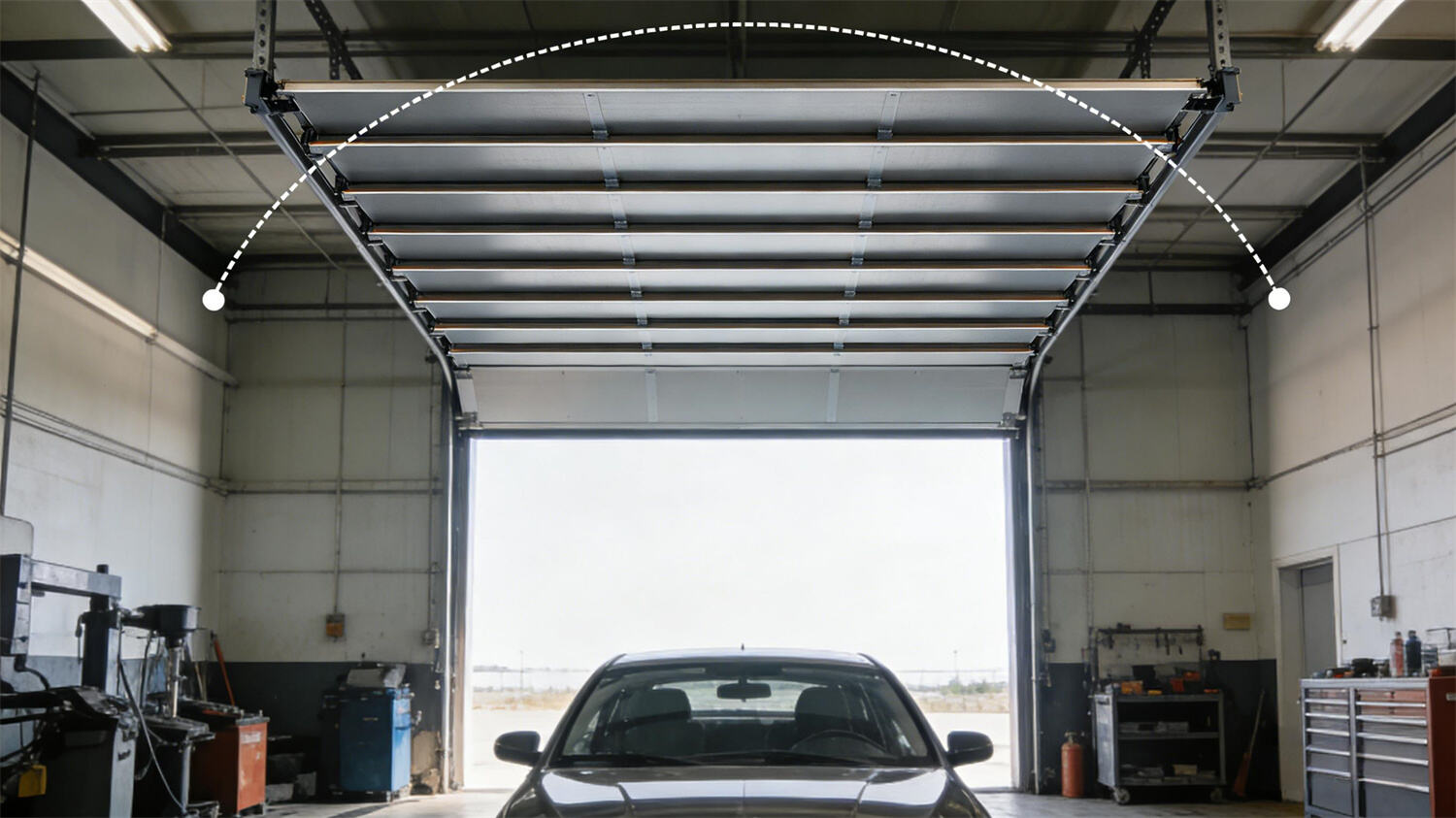
Sectional overhead doors are constructed from multiple horizontal panels hinged together. When opening, they move upward along tracks and are stored parallel to the ceiling. This design means they do not require any space in front of the opening, making them ideal for locations with limited space both inside and out.
Typical Applications:
- Fire Stations: Require large openings to be opened quickly and reliably.
- Car Dealerships / Service Workshops: Provide spacious access for vehicles.
- Commercial Warehouses: In situations requiring good thermal performance and a neat appearance.
- Residential Garages: The preferred choice for high-end homes and villas.
Key Technical Features:
Door panels are typically constructed of double-layer steel with a polyurethane foam core, offering excellent thermal insulation. Panel surfaces can be finished in various colors and textures (e.g., wood grain), combining functionality with aesthetics. Equipped with spring balance systems (torsion or extension springs), they can be opened manually with ease even during power outages.
Safety Features: The Lifeline of Industrial Doors
Regardless of the type of industrial door chosen, safety features are a non-negotiable底线. The following are core safety functions that industrial doors must possess:
1. Photoelectric Sensors: Infrared photoelectric sensors installed at the bottom or on the sides of the door detect people or objects beneath it, immediately stopping the closing motion and reversing the door.
2. Safety Edges: Pneumatic or mechanical safety edges installed at the bottom of the door trigger a stop/reverse signal upon contact with an obstacle.
3. Emergency Stop Buttons: Prominently marked red emergency stop buttons located on both sides of the door allow for immediate interruption of door movement at any time.
4. Manual Release Mechanism: In case of power failure or system malfunction, a manual release mechanism allows the motor to be disengaged, enabling the door to be opened manually.
5. Fall Protection: For roller shutters and overhead doors, fall protection devices (such as spring break protection) are mandatory to prevent the door from suddenly falling if a spring or cable breaks.
Conclusion
Selecting an industrial door is a systematic decision that requires comprehensive consideration of operational needs, environmental conditions, safety standards, and budget. OUTUS offers a full range of industrial door products, including High-Speed Doors, Industrial Roller Shutters, and Sectional Overhead Doors, backed by a professional technical team capable of tailoring optimal entrance solutions for every industrial project.
Please contact OUTUS to allow our industrial door experts to provide free selection consultation for your next project.



 EN
EN