EN
EN





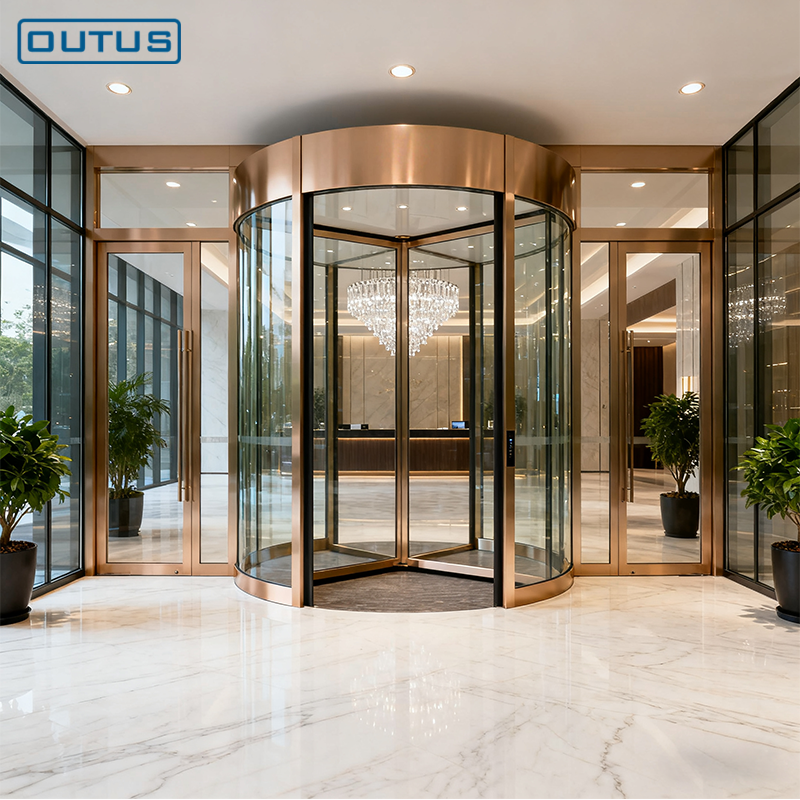
In the contemporary built environment, the entry has become not just a door, but an important boundary between a building’s interior working climate and surrounding outdoor conditions. Conventional swing doors are energy wasters in that conditioned air can escape and unconditioned air infiltrates whenever a door is opened. But for facility managers, architects and developers with a keen eye on sustainability and operational efficiency, automatic revolving doors offer an even more powerful solution. Presented to you by Suzhou Oredy Intelligent Door Control Co., Ltd., this guide tips off where the perfect revolving door system can serve as a cornerstone of your building’s energy-saving design, and advises how to determine a supplier who walks the talk when it comes to meeting technology standards.
The Principle Regarding Thermal Barrier & Energy Savings
The primary energy saving benefit of an automatic revolving door is it's always open compartmentalized concept. Because unlike the massive open doors the case of a swing door, for example revolving door operates by forming an insulating cold bridge/stopping hot bridge. The rotating wings and center drum continuously divide the inside from outside as people pass through. At all times, a set of wings is blocking the building envelope.
This air-tight seal significantly minimizes "air infiltration" or "air exchange". In winter, it stops warm (and expensive) indoor air from escaping, and cold drafts from entering. In summer, on the other hand, the cool air produced by your air conditioner stays inside and hot, humid outside air is kept out. The amount of energy used to re-heat, for example, or to re-cool the air that goes out through a conventional door is great. In reducing this transfer, revolving doors greatly decrease the work being done by HVAC equipment and help to save money on energy costs.
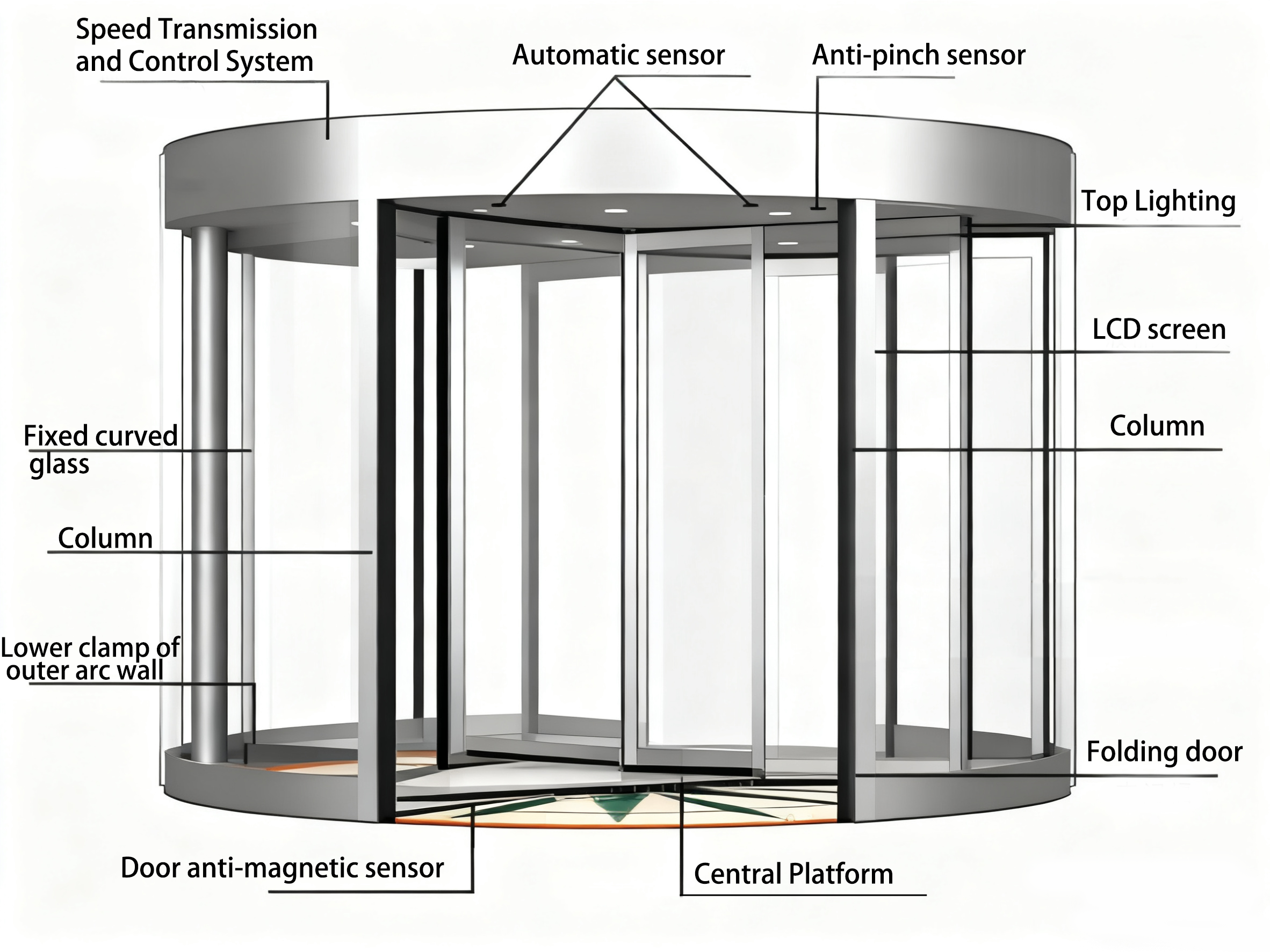
The engineering philosophy of Suzhou OUTUS is based on this same principle. Our door are engineered to provide precision sealing systems, with premium brushes and heavy duty gaskets provided in all critical interfaces between the wing panels. This degree of application the thermal barrier means the entrance is no longer a weak point in the building’s envelope, but instead becomes a part of the energy management system.
Smart Controls & Energy-Saving Modes
Physical form provides the wall, smart control the next level of efficiency. Today, automatic revolving doors are more than mere mechanical devices – they’re intelligent, connected entryways that can respond to building traffic and regular environment changes on the fly.
Advanced control software (such as that produced by Suzhou OUTUS features various energy reduction modes. The most convenient of these has to be the speed control. The door runs with a regular speed at peak hours, effective for much faster passing. In off-peaks time, the rotational speed can be automatically decreased by the system. A door which moves at a slower rate results in less turbulence, less displacement of air and more effective thermal barrier.

Another essential aspect is the stand-by or low-power state. If the door is left unused for a certain time, the wings can be automatically positioned to close tightly and to be in power-save mode. The door is still smart, with sensors in place ready to "see" incoming bodies and automatically re-engage normal behaviour. This not only saves energy from air exchange, but also lowers the door's own power consumption.
In addition, integration with a BMS is a big issue. An intelligent revolving door is able to speak with the building's central HVAC and energy-management systems. If, for example, the BMS senses a pressure imbalance between the interior and exterior (a frequent cause of drafts), it can tell the door to change its operation in order to mitigate that. This integrated design approach will ensure that all building systems work together for maximum performance.
Evaluating Supplier's Energy-Saving Technology & Data
When choosing a manufacturer for your automatic revolving door, it’s not enough to simply consider looks and standard operation. The level of function in their energy-saving tech and their capability to offer progress metrics you can verify should be leading factors.
Prospective buyers need to ask questions. Are the motors of high efficiency low voltage type, to reduce power consumption? How good are their seals and do they last? Do they have intelligent modes, like the smart modes as described above, advanced control features? Most importantly if the energy saving claims are for real, reputable suppliers will offer some sort of technical description and case studies.
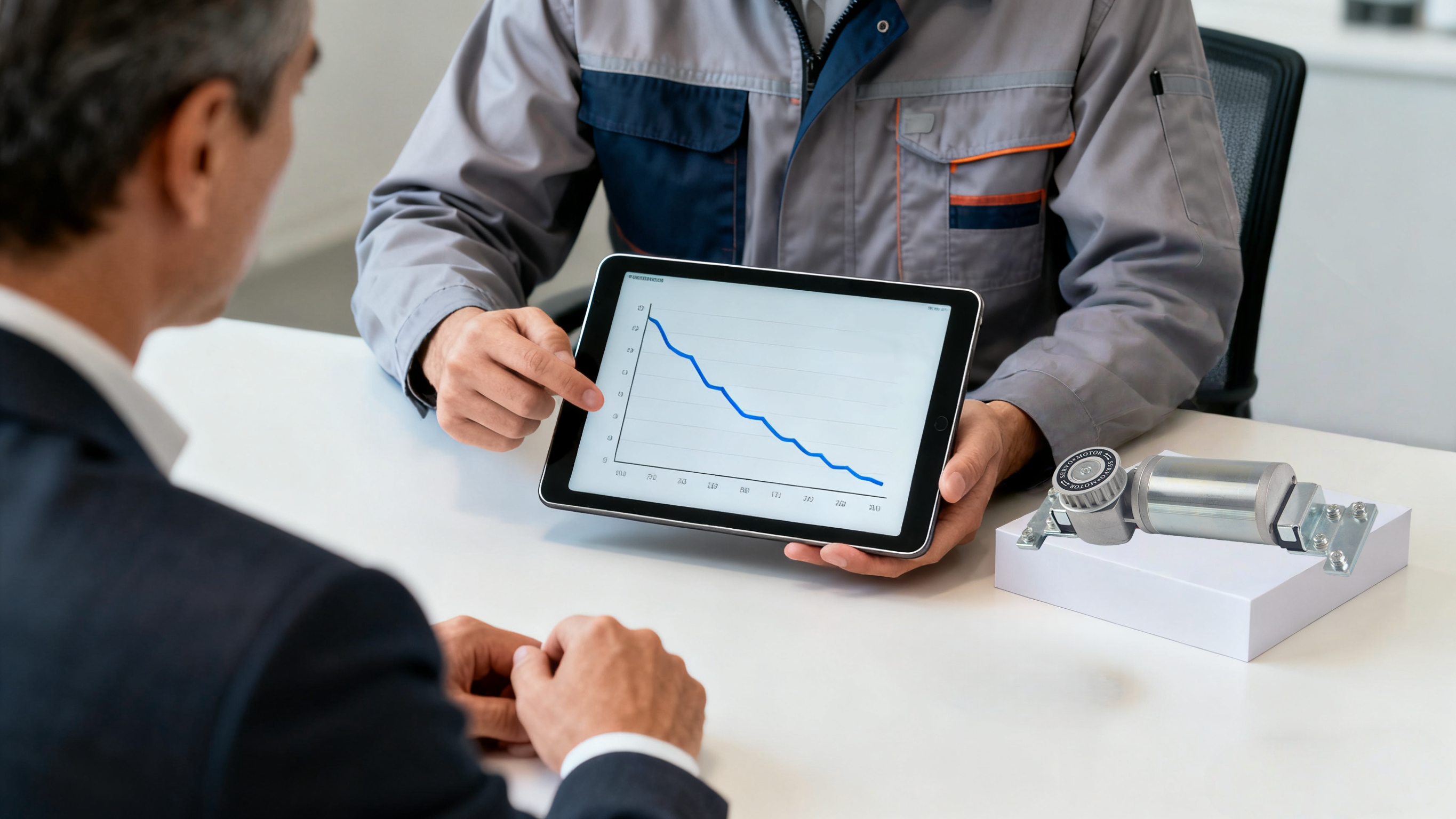
Seek providers who can talk to you about their drive systems in a meaningful way, the insulating properties of their materials, and why they use them as they do. Take Suzhou OUTUS as example, which put a great deal of efforts into R&D for its products’ improvement in these same respects. We are concentrated on robust and reliable systems which deliver highest performance. We also offer performance projections and data for how our products can contribute to LEED certification and other green building standards. The ability and willingness of a supplier to have these kinds of technical conversations is an excellent indicator that they are in fact serious about real energy efficiency.
Life-Cycle ROI Analysis
Starting costs of an automatic revolving door cost more as opposed to a typical door. Accordingly, a total Life-Cycle ROI analysis is required to justify the capital expenditure. This analysis goes beyond the initial purchase price to the total cost of ownership and then compares it to the financial return over the door's life.
There are a number of variables that go into the ROI equation for an energy-efficient revolving door. The most notable would be the savings on energy. And by measuring the expected reduction in HVAC load, you can calculate annual savings on heating and air conditioning costs. And the savings add up each year, directly recouping the original outlay of cash.
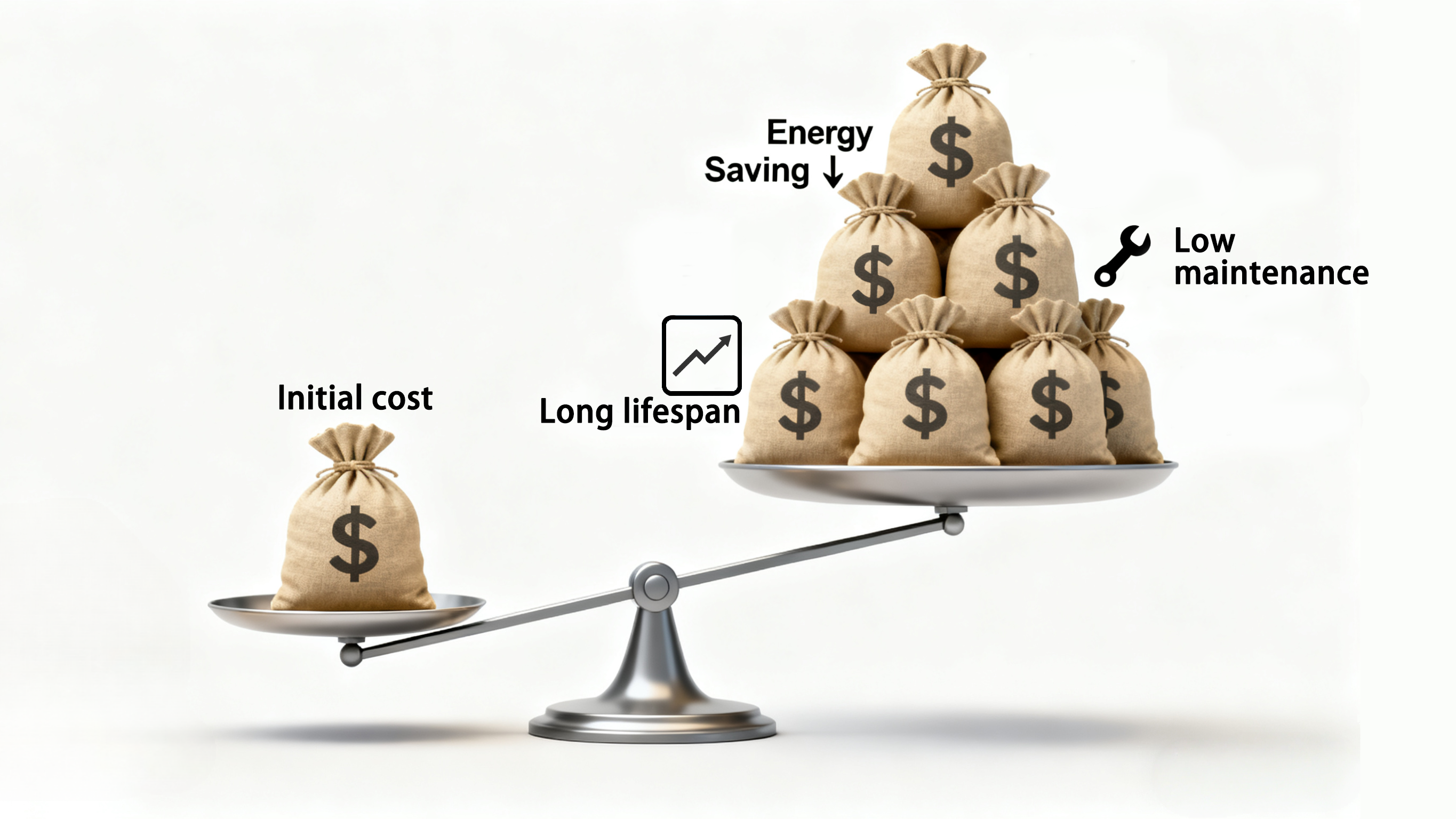
Additional financial benefits include:
Maintenance is less: A well-designed revolving door from a reputable source will not suffer as much wear and maintenance that would normally befall a swinging door, due to pressure differences, wind loadings and temperature changes, it means less maintenance long term.
Longer Product Life: Better quality materials and construction mean that you don't have to replace your product as often.
Better Traffic Flow & Safer: Lesser congestion at the gates leads to better user experiences and better traffic management which can ultimately translate into an increase in capacity of a building's or site lobby (which improvements do not show up directly on balance sheets).