EN
EN






Introduction
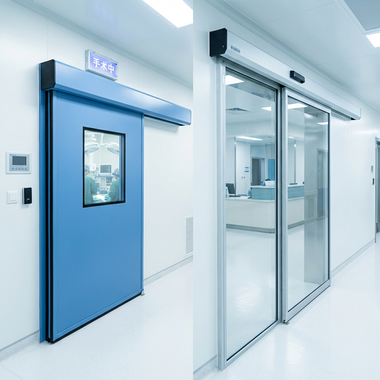
In selecting a door control solution to be used in the operating rooms of hospitals, one would tend to compare airtight doors and regular automatic doors: the first one is expensive to implement but guarantees professional cleanliness and safety, the latter appears to be less expensive but exposes a hospital to risks of hospital-acquired infections, non-compliance, and waste of energy in the long-run. This objective paper provides a comparison of pros and cons of the two categories of doors based on factors like cost, power use, security and situations that they are applicable to, and by the balance of short and long-term returns, you will be able to select the best option when fitting an operating room with this category of doors.
How to Balance Initial Costs and Long-Term ROI?
| Dimension | Medical Airtight Door | Regular Automatic Door |
| Initial Purchase Cost | Higher (professional sealing, medical-grade materials, intelligent safety systems) | Lower (basic structure, general-purpose components) |
| Maintenance Cost | Medium-Low (high-quality seals have long lifespan, fewer failures) | Medium-High (seals age easily, frequent replacements, frequent failures) |
| Compliance Cost | Low (passes standards like GB/T 38891-2020 in one go, no rework) | High (substandard air tightness leads to acceptance rework and infection control penalties) |
| Energy Cost | Low (good air tightness saves over 15% on annual HVAC energy) | High (air leakage increases HVAC load, energy waste) |
| Long-Term ROI | High (recovers price difference via energy, maintenance, and compliance costs in 3–5 years) | Low (short-term savings, long-term continuous investment in failures, rework, and energy) |
How Does Air Tightness Impact Operating Room Energy Consumption and Cleanliness Control?
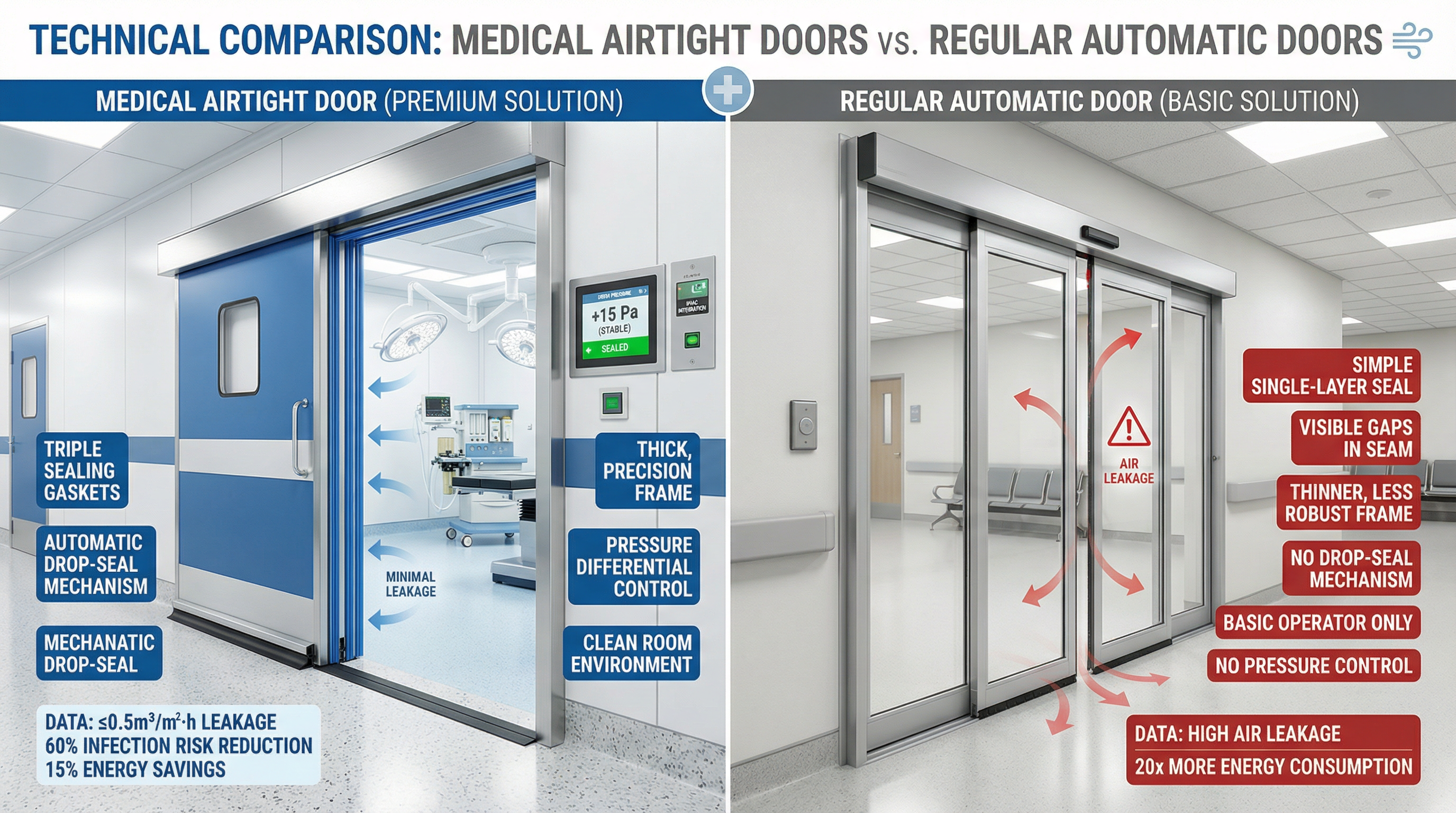
· Medical Airtight Doors: Adopt triple sealing + automatic drop-seal technology, with door seam leakage ≤0.5m³/㎡·h, stable clean area differential pressure, 60% reduction in cross-infection risk, and over 15% annual HVAC energy savings.
· Regular Automatic Doors: Simple sealing structure, extreme air leakage, unstable clean area differential pressure, easy infiltration of pollutants and HVAC energy consumption that is 20 times more than airtight doors.
What Are the Safety and Compliance Standards for Operating Room Door Control?
| Dimension | Medical Airtight Door | Regular Automatic Door |
| Air Tightness Standard | Compliant with GB/T 38891-2020, passable by third-party testing | No professional air tightness standard, only meets general door requirements |
| Radiation Protection | Optional ≥2mmPb lead plate, suitable for DSA interventional operating rooms | No radiation protection, unsuitable for special departments |
| Emergency Safety | Manual opening on power failure (≤15kg thrust), triple interlock protection | High emergency opening force, no professional safety interlock, high risk |
| Electromagnetic Compatibility | Compliant with EMC standards, no interference with precision equipment like C-arms | Prone to electromagnetic interference, affecting medical equipment operation |
Which Scenarios Are Suitable for Airtight Doors Instead of Regular Automatic Doors?
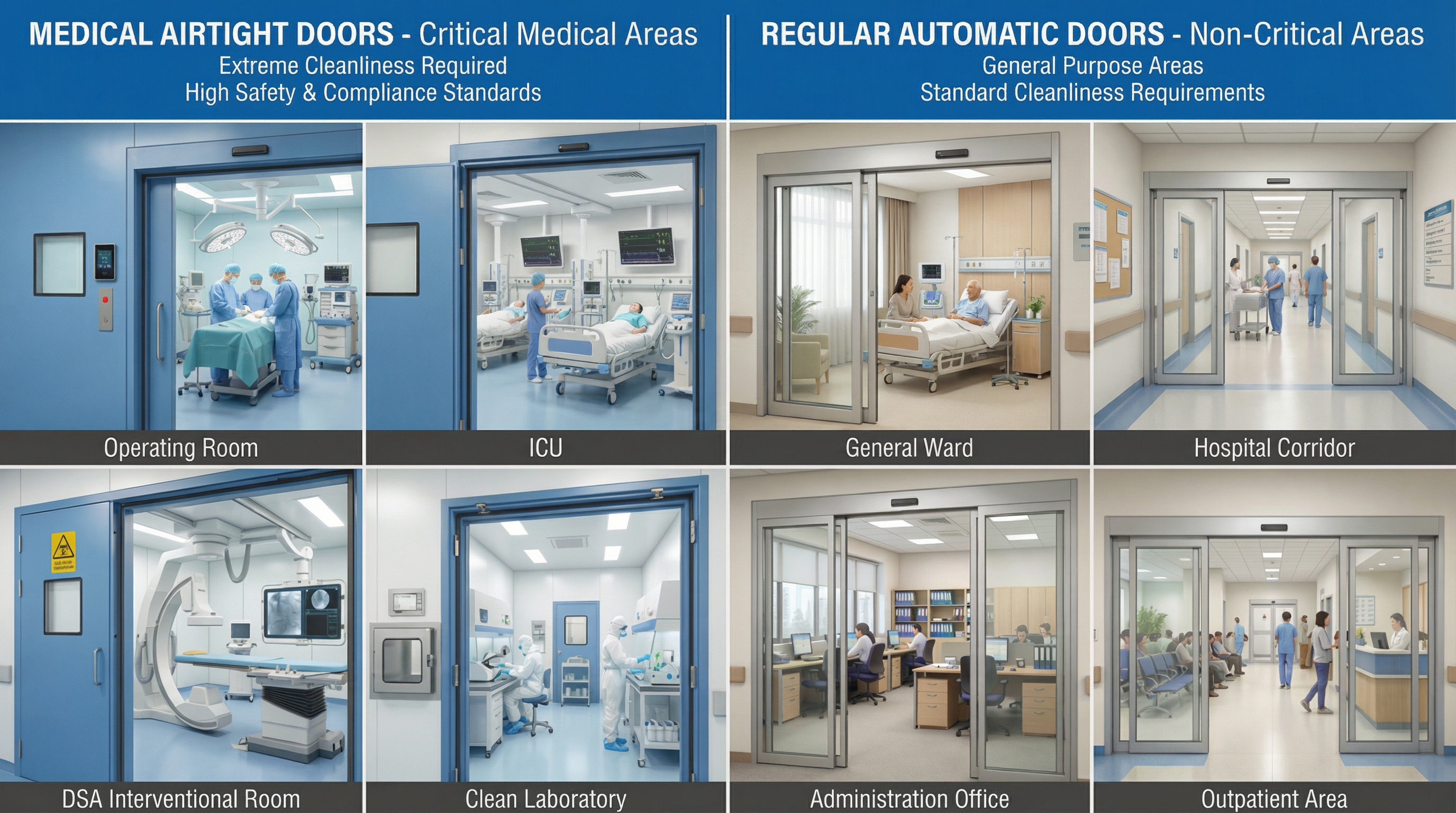
Medical Airtight Doors: Operating rooms, ICUs, DSA interventional rooms, clean laboratories and other extremely cleanliness, safety, and compliance requirements.
Normal Automatic Doors: An all-purpose wards, corridors, administration offices, and other non-core medical locations that do not need high standards of cleanliness.
Conclusion
In the case of core medical situations, such as operating rooms, the decision to go with regular automatic doors might be viewed as cost-effective but in reality, a tradeoff of long-term compliance risks, infection control risks, and energy wastage against short-term cost benefits. Although the initial investment of medical airtight doors is higher, it offers greater ROI to hospitals due to constant air tightness, assured safety, and reduced long-term costs.
In case you are still having trouble making the decision, you can contact us and have a professional evaluation.
CTA
Today to receive the free Medical Door System Compliance Checklist contact us and our professional team will assist you in assessing the door control solutions so you can make an optimal decision to your operating room environment.
Table of Contents
- Introduction
- How to Balance Initial Costs and Long-Term ROI?
- How Does Air Tightness Impact Operating Room Energy Consumption and Cleanliness Control?
- What Are the Safety and Compliance Standards for Operating Room Door Control?
- Which Scenarios Are Suitable for Airtight Doors Instead of Regular Automatic Doors?
- Conclusion
- CTA