EN
EN






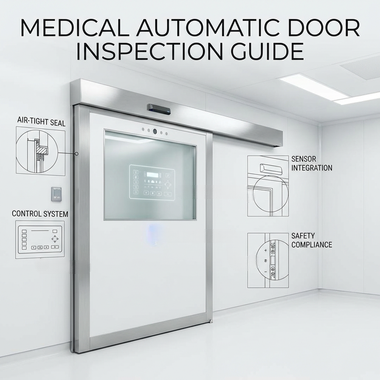
An automatic door is not only an entrance in operating rooms but also an essential element of infection control and air control.
But in the process of acceptance of projects, most hospitals tend to place a lot of emphasis on outward looks and not paying attention to important technicalities. It is possible that, a door can appear solid and firmly closed, but has air leakage or structural flaws or a loosely-integrated intelligent control system.
This is an informative guide that explains the key areas of inspection that should be done to establish whether a medical automatic door is indeed operating room-worthy.
Sealing Performance: The Core of Operating Room Doors
In the case of operating rooms, air tightness is the main requirement. Clean airflow control cannot take place without appropriate sealing.
Quick On-Site Verification Methods
Air Leakage Check
Smoke within the room with non-toxic smoke and note whether or not the smoke leaks around the frame of the door. Medical automatic doors should be properly installed to ensure air leakage of ≤0.5 m³/m²·h, which is within the clean room requirements.
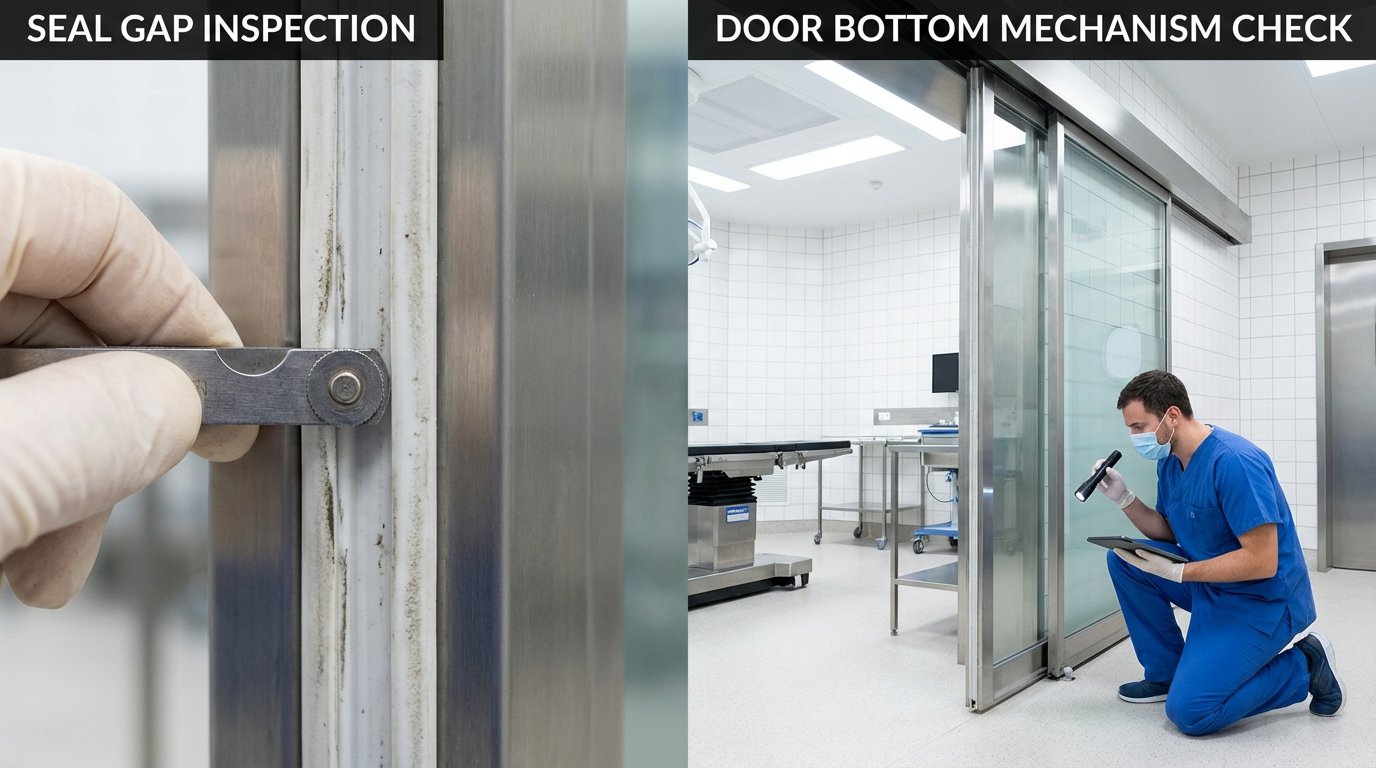
Gap Measurement
Check the clearance of door leaf and frame with a feeler gauge. A qualified installation will generally have a minimum of ≤0.6 mm. Gaps of higher size will enhance the chances of leakage over the long term.
Bottom Sealing Inspection
Test the bottom sealing strip - is it automatic and does it fall down and well into the floor? This prevents air infiltration through the under door which is an unsuspected issue.
Good quality medical doors usually have the EPDM anti-aging sealing strips which keep it elastic and stop deformation with time.
Door Structure & Material Requirements
Operating rooms are subject to a large number of operations, a high level of hygiene and in some cases radiation protection is demanded. Normal retail doors will not do.
Key Structural Checks
Panel Material
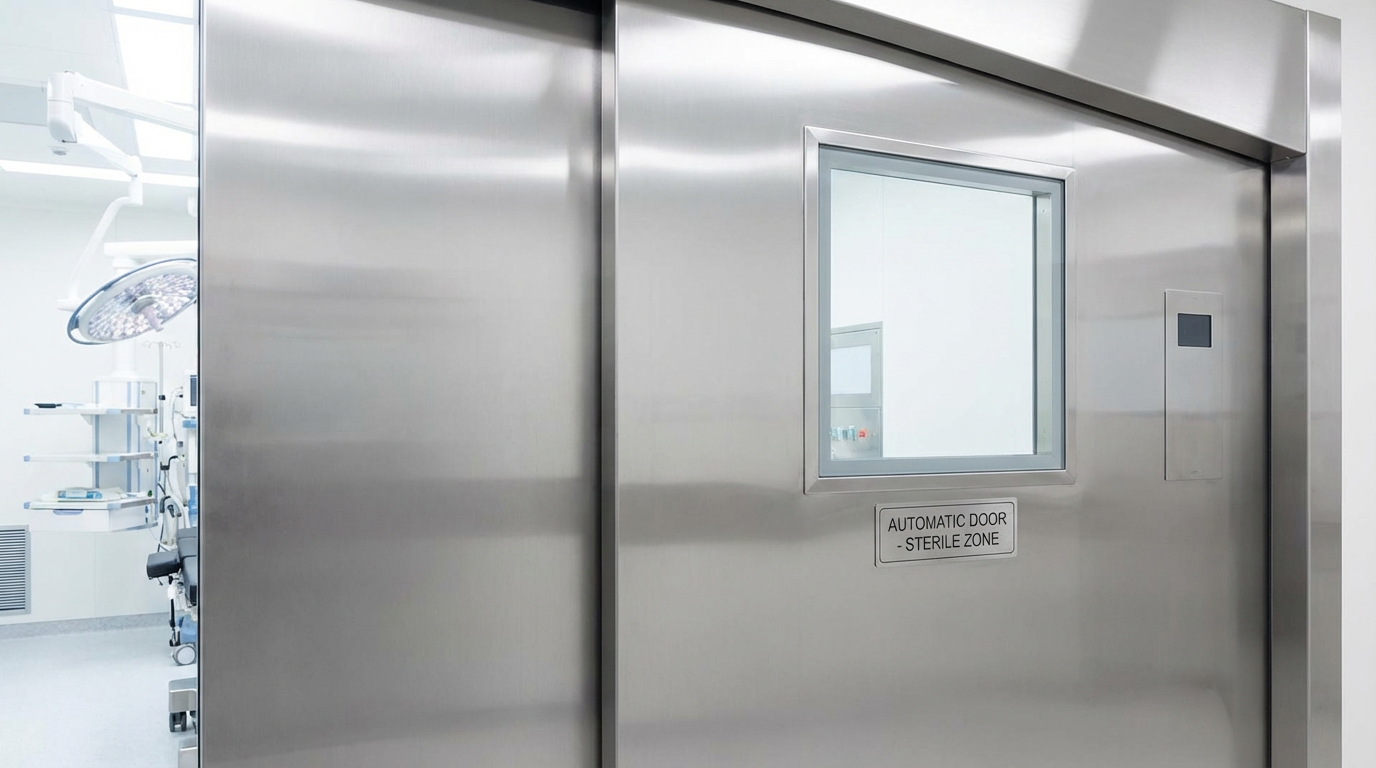
Stainless steel integrated panels are usually recommended to be used in medical setting and are of 304. It should be non-magnetic and smooth and it must not contain welding gaps which harbor contaminants.
Surface Quality
No burrs, scratches, and sharp edges. The surface roughness must be regulated (such as, ≤Ra1.6 μm) to satisfy hygienic requirements.
Internal Filling Material
Fire resistance, moisture resistance and structural stability are normally provided by using flame-retardant paper honeycomb or polyurethane foam.
Radiation Protection (If Required)
In the case of DSA or interventional operating room, lead plate protection (such as, ≥2mmPb) might be needed. Sealing performance should not be undermined by radiation shielding.
Intelligent Functions for Busy Medical Environments
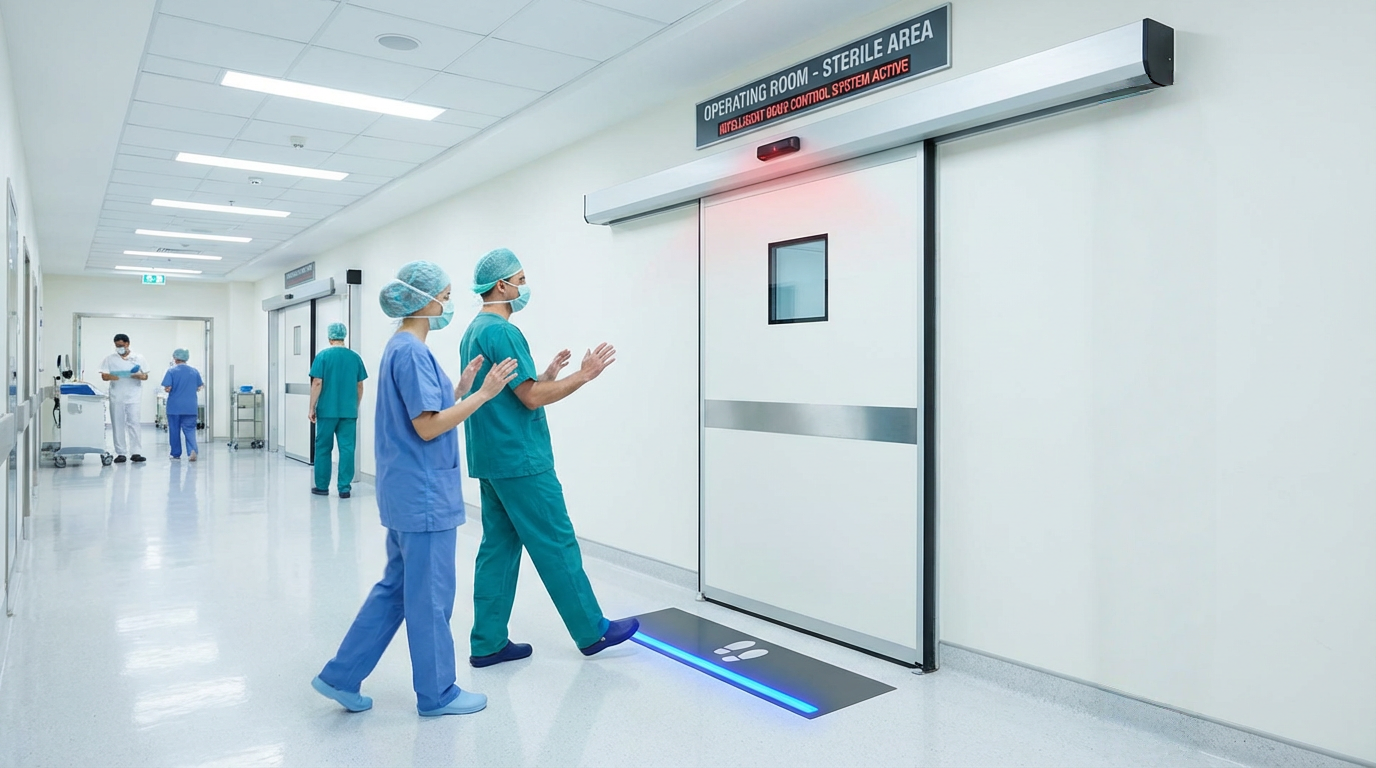
In an operating room, the medical personnel are expected to move fast and not touch their hands where necessary.
An intelligent medical automatic door must offer:
Dual Activation Modes
Infrared sensor + foot sensor to operate without touching anything.
Anti-Pinch Protection
Delayed closing, secondary sensing and obstacle detection to avoid accidental injury.
EMC Compatibility
Meeting the electromagnetic compatibility to prevent interference with accuracy medical machines like C-arm machines and monitors.
The intelligent systems are not supposed to introduce delays in operation but to improve the efficiency of the workflow.
Safety During Emergencies & Power Failure
There is no compromise on safety in the hospital setting.
Major inspection points are:
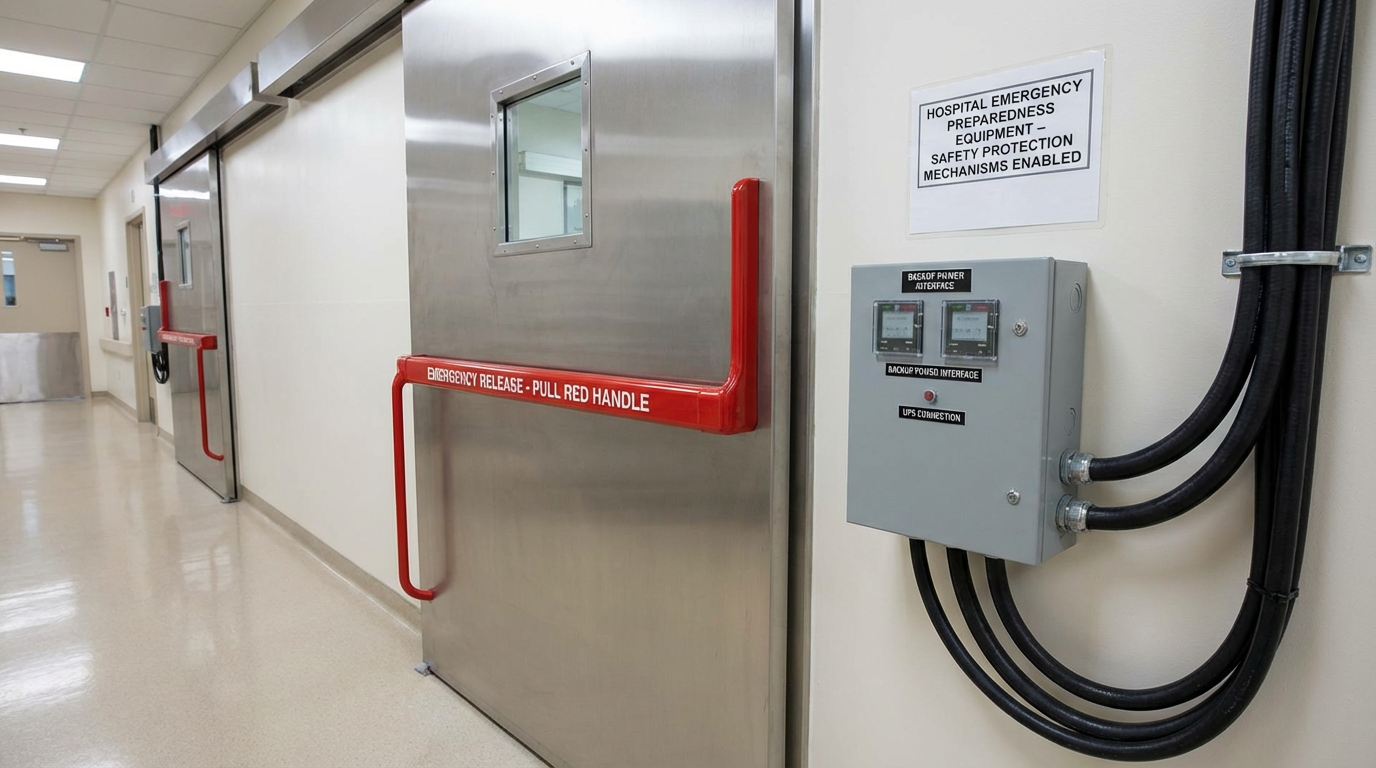
Manual Opening During Power Failure
The door must be manually accessible with the reasonable force (such as. ≤15 kg thrust) in order to allow emergency evacuation.
Clearly Marked Emergency Release
Handles of the emergency must be clear and simple to use.
Backup Power Interface
UPS compatibility guarantees the temporary maintained operation in case of outage.
Multiple Safety Protections
The use of motor protection, mechanical safeguarding, and infrared safety systems ought to be associated to eliminate chances of malfunction.
Installation Quality Directly Affects Long-Term Performance
Even a good quality door can break down when it is installed wrongly.
On-Site Acceptance Checks
- Push the door surface, it should have no looseness or vibrations.
- No apparent surface damage or open welding.
- Check that observation windows are made of vacuum glass that is safe with rounded edges.
- Ensure frame and wall are in line with each other to avoid long-term deformation and leakage.
The error in installation has a direct effect on service life and sealing performance.
Summary: Operating Room Automatic Door Acceptance Checklist
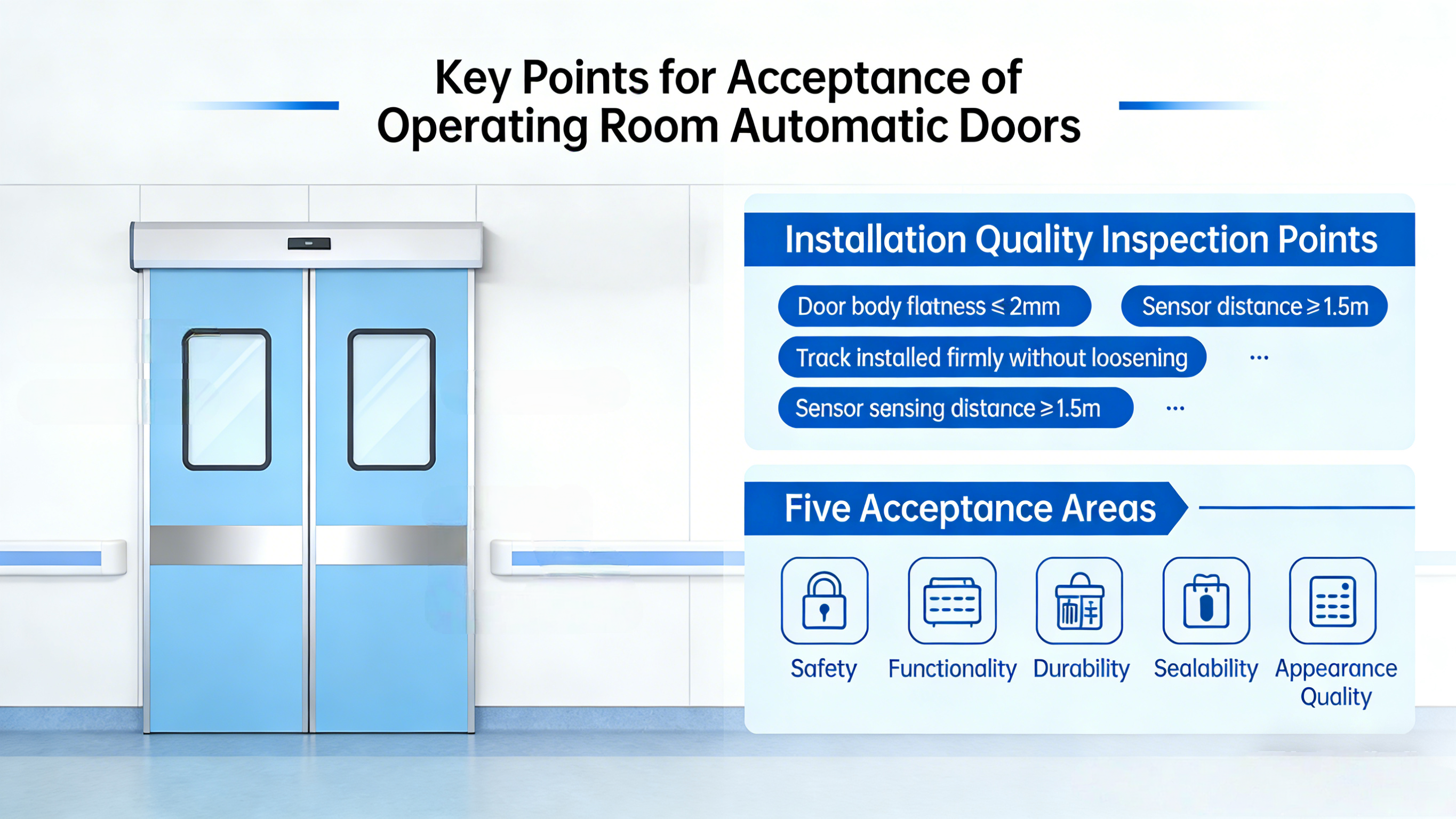
When check-up of a medical automatic door, pay your attention to five fundamental areas:
1. Sealing performance
2. Door material and structure
3. Intelligent control system
4. Safety protection during emergency
5. Installation quality
Systematic analysis assists the hospital equipment departments, infrastructure department and procurement managers to evade expensive long-term maintenance problems.
About OUTUS Medical Automatic Doors
OUTUS is a company that deals with medical automatic doors that are specifically manufactured to be used in operating rooms and clean areas. We are creating solutions based on consistent airtight performance, medical compatible materials, smart touch free operation and durability.
We assist hospitals, contractors, and distributors with tailored door control solutions and distinct technical acceptance standards.
In case you would like to be provided with a convenient Operating Room Automatic Door Acceptance Checklist (PDF) or you would like to discuss a certain project in the hospital, you can get in touch with our technical department.
Table of Contents
- Sealing Performance: The Core of Operating Room Doors
- Door Structure & Material Requirements
- Intelligent Functions for Busy Medical Environments
- Safety During Emergencies & Power Failure
- Installation Quality Directly Affects Long-Term Performance
- Summary: Operating Room Automatic Door Acceptance Checklist
- About OUTUS Medical Automatic Doors