
A high-quality automatic door system represents a significant asset investment. However, even the most advanced equipment will suffer degraded performance, safety, and lifespan without systematic maintenance. According to industry experience, a well-maintained automatic door system can operate reliably for 15 to 20 years, while a neglected system may experience severe performance decline within 5 to 7 years. This article provides a comprehensive preventive maintenance guide for property managers, facility maintenance teams, and automatic door distributors, aimed at helping you maximize return on investment and ensure your door control system always operates at peak condition.
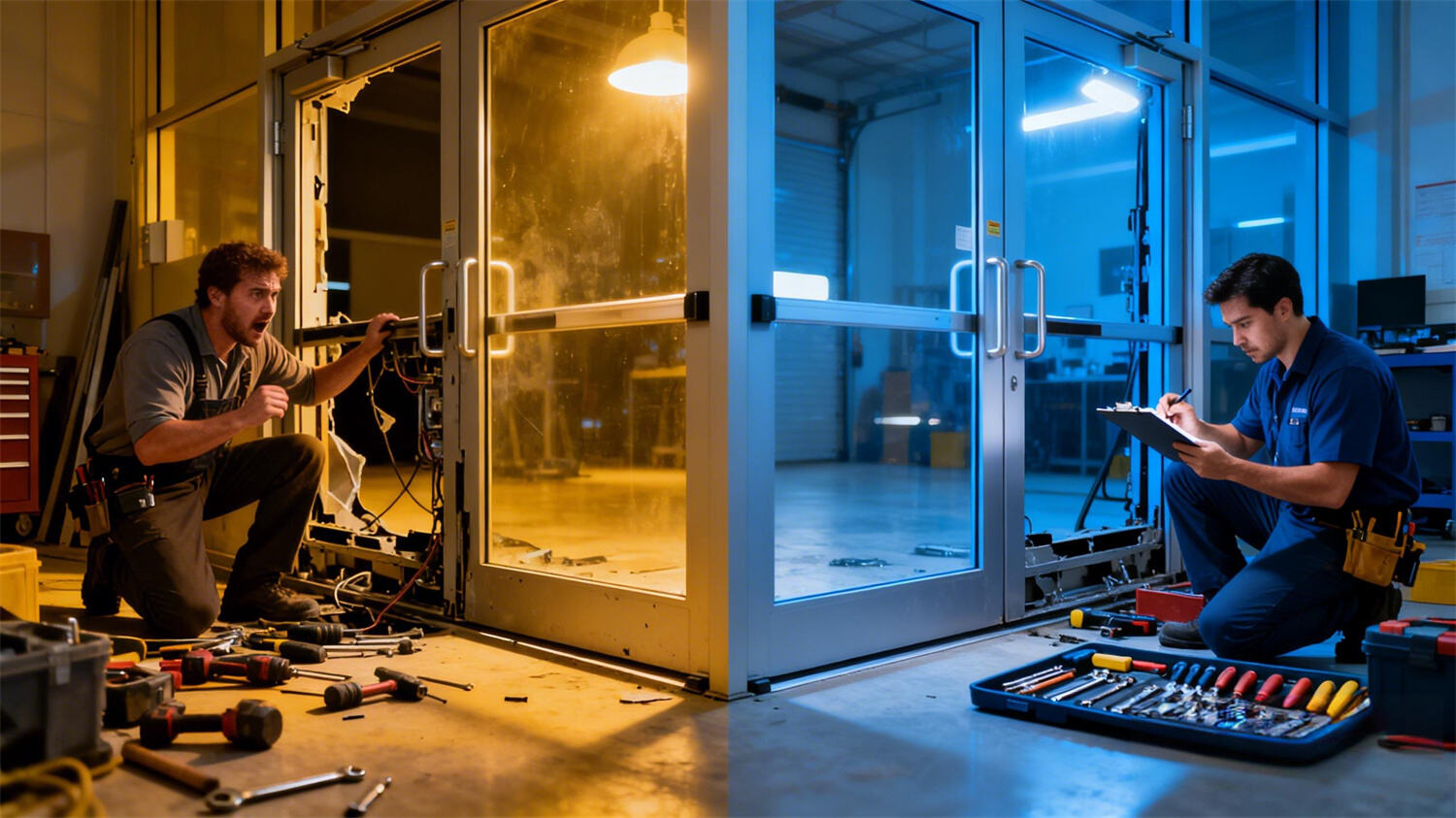
Why is Preventive Maintenance So Important?
Many building owners only resort to repairs after obvious malfunctions occur. This "reactive maintenance" model is not only costly but also presents serious safety hazards. In contrast, Preventive Maintenance is a proactive, planned strategy whose core value lies in:
| Dimension | Reactive | Preventive |
| Cost | Emergency repairs are costly and may require the replacement of expensive parts | Make regular small investments to avoid large and sudden expenditures |
| Safety | There are safety risks during the malfunction (such as the door not closing or closing suddenly) | Continuously ensure that sensors and safety devices are functioning properly |
| Downtime | The door cannot be used during the waiting period for maintenance, which affects normal operation | There is almost no downtime, and maintenance is usually carried out outside business hours |
| Service life | Frequent malfunctions and emergency repairs accelerate the aging of equipment | Significantly extend the overall service life of the equipment |
Maintenance Cycles and Inspection Checklists
We recommend establishing a three-tier maintenance system: Daily Inspections, Monthly Maintenance, and Semi-Annual/Annual Professional Servicing.
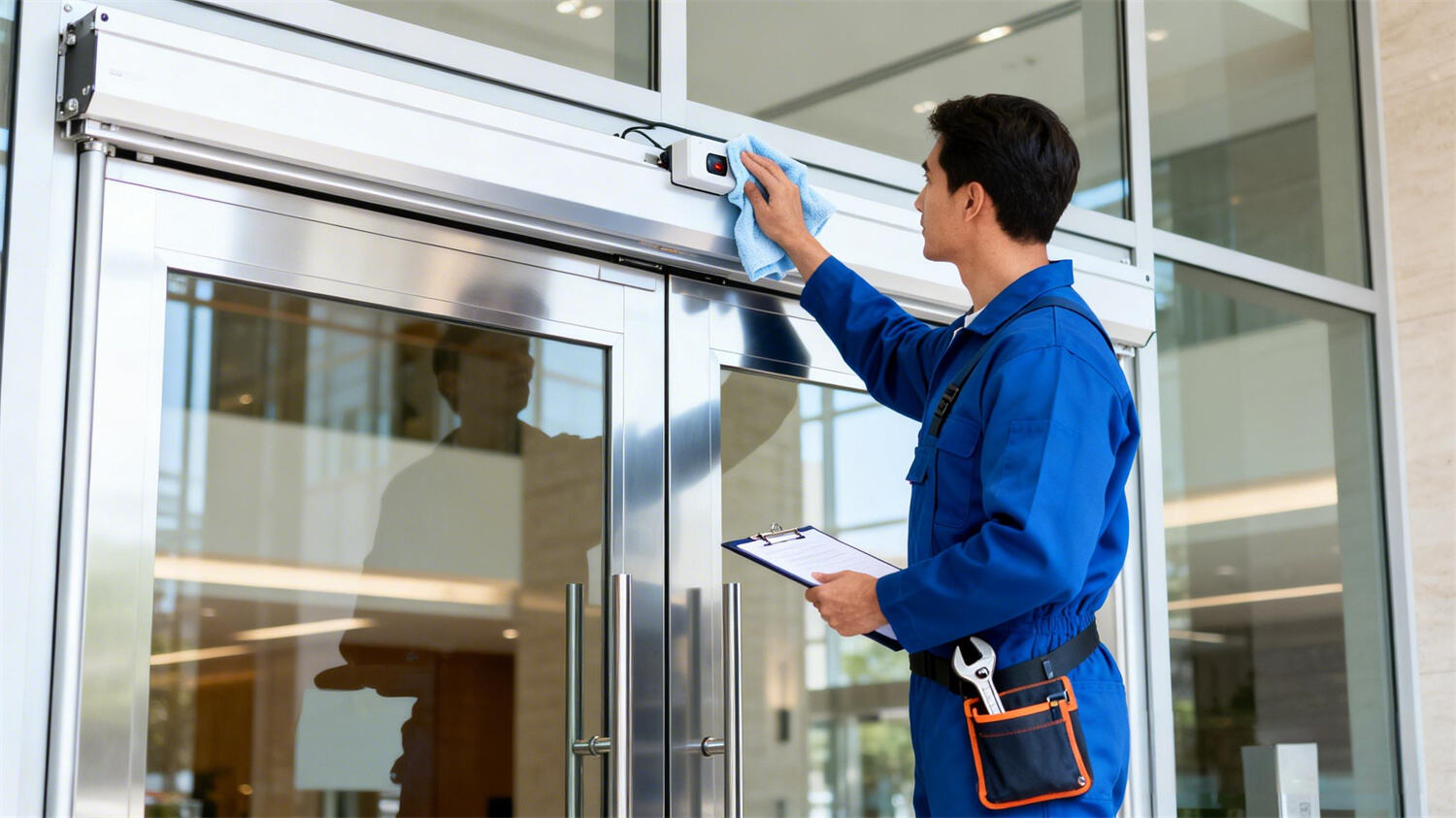
Tier 1: Daily Inspections (Performed by Property/Security Staff)
Daily inspections are the first line of defense in the maintenance system. They require no specialized technical knowledge but are crucial for early problem detection. Before opening each day, designated personnel should spend about 5 minutes completing the following checks:
1. Visual Inspection: Observe door leaves, tracks, and frame for any obvious physical damage, deformation, or accumulation of debris.
2. Operation Test: Manually trigger the door to open and close. Observe if the movement is smooth, and listen for any abnormal noises or hesitation.
3. Safety Sensor Test: While the door is closing, place an object (like a cardboard box) in its path. Confirm that the door immediately stops and reverses direction.
4. Emergency Function Test: Verify that the emergency break-out function works correctly, allowing the door to be opened manually in a power failure.
Tier 2: Monthly Maintenance (Performed by In-house Maintenance Team)
Monthly maintenance requires some technical knowledge and basic tools, focusing on cleaning and lubricating mechanical components.
5. Track Cleaning: Thoroughly remove dust, debris, and standing water from both floor tracks and overhead tracks. This is one of the most common causes of door operating issues.
6. Sensor Cleaning: Gently wipe the lenses of all motion sensors and safety sensors with a soft, dry cloth to ensure their sensitivity is not impaired by dust.
7. Seal Inspection: Check the seals (brush strips or rubber gaskets) at the bottom and sides of door leaves for wear or detachment. Replace them promptly to maintain airtightness and energy efficiency.
8. Hardware Tightening: Inspect all visible bolts, nuts, and connections for looseness, paying special attention to hinges and door leaf suspension systems.
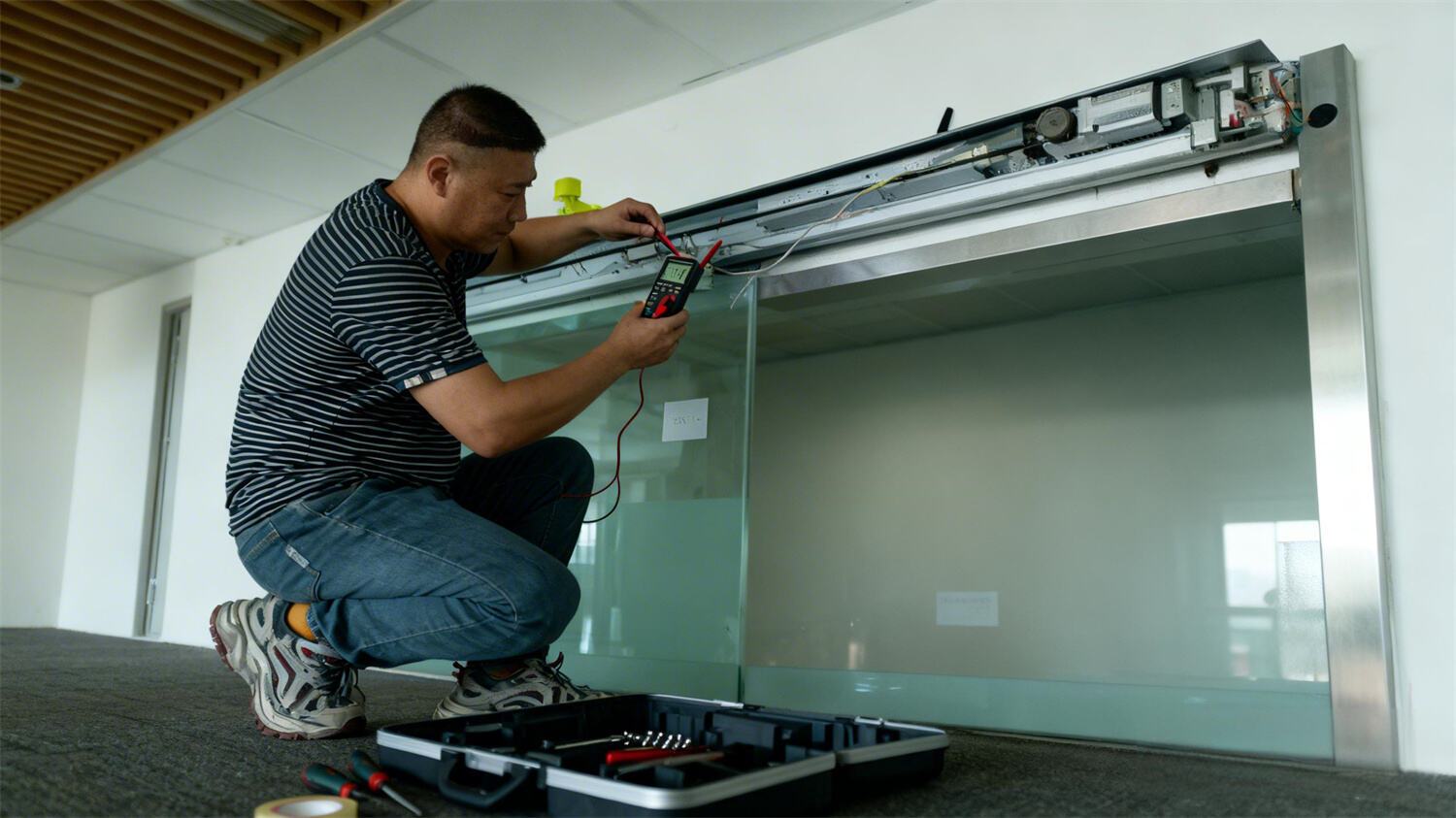
Tier 3: Semi-Annual/Annual Professional Servicing (Performed by Certified Technicians)
This is the most comprehensive and in-depth level of maintenance. It is strongly recommended to be carried out by professional technicians from the automatic door manufacturer or their authorized service providers. Industry standards suggest professional servicing at least every six months.
9. Motor and Drive System: Check motor operating condition, belt/gear wear levels, and perform lubrication or replacement as needed.
10. Controller and Electronic Components: Inspect the controller's firmware version, parameter settings, and the reliability of all electrical connections.
11. Sensor Calibration: Precisely calibrate all sensors to ensure their detection range and sensitivity comply with safety standards (e.g., EN 16005 or ANSI/BHMA A156.10).
12. Speed and Force Testing: Use specialized instruments to measure the door's opening/closing speed and the force exerted on an obstacle, ensuring they are within safe limits.
13. Complete Safety Audit: Conduct a thorough safety audit of the entire system and provide a written report documenting all findings and recommendations.
Common Problems and Quick Diagnostics
| Common phenomena | Possible reasons | Suggested measures |
| The opening/closing speed of the door has slowed down | The guide rail is dirty, the belt is loose, and the motor is aged | Clean the guide rails, check the belt tension, and contact professionals to inspect the motor |
| There is an abnormal noise when the door is running | Roller wear, guide rail deformation, loose hardware parts | Inspect and replace the worn rollers and tighten the hardware |
| The door cannot be closed completely | False alarms from the sensor (dust or spider webs) or foreign objects on the guide rail | Clean the sensor and the guide rail |
| The door opens automatically when no one is around | The sensor's sensitivity is too high, or there are heat sources or moving objects nearby causing interference | Adjust the sensor's sensitivity and detection range |
| The door failed to detect any obstacles when it was closing | Serious safety hazard! The safety sensor is faulty or not calibrated | Stop using it immediately and contact a professional for maintenance |
Conclusion: Maintenance is an Investment, Not a Cost
Viewing automatic door maintenance as an ongoing investment, rather than an unnecessary expense, is a crucial mindset for every property manager. A systematic preventive maintenance plan not only significantly reduces the Total Cost of Ownership (TCO) but also ensures that your building entrance always operates safely, efficiently, and aesthetically.
OUTUS provides comprehensive after-sales support for all customers and distributors, including customized maintenance plans, genuine spare parts supply, and remote technical diagnostics. We are committed to building a long-term partnership with you, ensuring that every OU



 EN
EN