
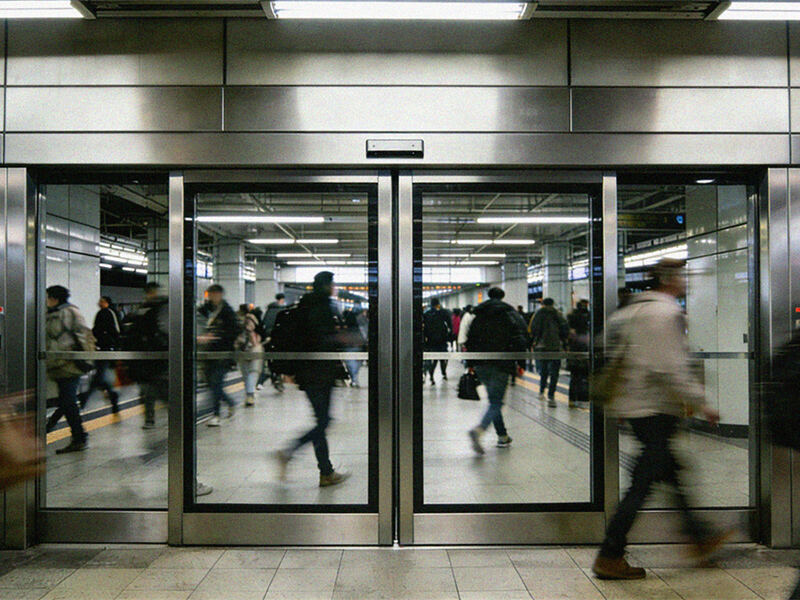
OUTUS automatic door operators, customised around the ORD150 model, delivered zero breakdowns and zero thermal shutdowns across 120 days of continuous operation at Singapore's busiest metro interchange — handling 123,000+ daily commuters, including peak Lunar New Year traffic.
Project Overview
| Project | Singapore North-South Line Metro Interchange Automatic Door System Upgrade |
| Location | Key Interchange Station, North-South Line, Singapore |
| Completion | December 2024 |
| Project Lead | Mr. Tan, Senior Transit Infrastructure Engineer (12+ years in Singapore public transport upgrades) |
The Problem
The station serves over 100,000 commuters daily and operates 24 hours a day, 7 days a week. The legacy door system was not built for this intensity. In the 12 months before the upgrade, the doors experienced 3–4 breakdowns per week — triggered by sensor false alarms from dense crowd movement, dust infiltration from the underground environment, and thermal shutdowns when motors reached their temperature limit during evening peaks.
Each breakdown caused an average of 12 minutes of platform delay. At 3–4 events per week, that was 36–48 minutes of schedule disruption weekly — and over 31 hours of lost operational time per year. The maintenance team was spending 8 hours per week on emergency repairs rather than preventive work. Standard commercial doors designed for shopping malls or offices are not engineered for this combination of high-cycle use, underground humidity, and fine dust.
What OUTUS Did
Mr. Tan's team conducted a two-week on-site assessment before selecting a solution. Based on the data — not a catalogue — three specific modifications were made to the OUTUS ORD150 system:
Motor cooling was upgraded with an enhanced thermal management design to sustain full performance through 24/7 operation without shutdowns. Side-mounted sealing units were added to block dust and humidity from entering the motor housing — a standard ORD150 does not include this for above-ground applications, but the underground metro environment required it. High-precision microwave radar sensors replaced the standard infrared sensors to eliminate the false trigger problem caused by high passenger density and reflective underground surfaces.
Results After 120 Days
Zero breakdowns. Zero thermal shutdowns. Zero dust jams. The system ran through Lunar New Year at 123,000+ daily commuters without a single intervention. Maintenance time fell from 8 hours to 5.2 hours per week — a 35% reduction. Commuter complaints about door incidents dropped to zero. Mr. Tan confirmed at the 120-day review: "This is the first time in 12 years I have seen a door system go 120 days without a single intervention. OUTUS did not just deliver a product — they solved a systemic operational risk."
Standard Doors vs. OUTUS ORD150 System
| Standard Automatic Doors | OUTUS ORD150 (Metro-Configured) | |
| Breakdowns | 3–4 per week | 0 in 120 days |
| Thermal Shutdowns | Frequent at peak hours | 0 |
| Sensor False Alarms | Frequent in crowds | Eliminated (microwave radar) |
| Dust/Humidity Resistance | Standard (above-ground spec) | Side-mounted sealing, underground-optimised |
| Weekly Maintenance Hours | 8 hours | 5.2 hours (−35%) |
| Complaint Rate | Multiple per week | 0 |
Key Technical Specifications
| Base Model | OUTUS ORD150 (metro-configured variant) |
| Load Capacity | 150 kg per single leaf |
| Motor | 100 W brushless DC, enhanced thermal management |
| Speed Range | 15–50 cm/s (adjustable for peak/off-peak) |
| Protection | Side-mounted dust and humidity sealing (underground-optimised) |
| Sensor | High-precision microwave radar |
| Operation | 24/7 continuous — no scheduled thermal breaks |
| Certification | CE(CertificateNo.:SIT210611580201E) |
Frequently Asked Questions
Q: Our station has high humidity and fine dust — does the standard ORD150 handle this, or does it need to be modified?
A: The standard ORD150 is specified for above-ground commercial environments. For underground metro conditions with elevated humidity and dust, we add side-mounted sealing to the motor housing as part of a site-specific configuration. This is standard practice for all our metro and basement-level installations.
Q: How long can the motor run without maintenance — our station cannot take planned downtime easily?
A: The metro-configured ORD150 is designed for 24/7 continuous operation without scheduled thermal breaks. Planned maintenance is recommended every 6 months and takes approximately 2 hours per door, which can be scheduled during overnight low-traffic windows.
Q: Does OUTUS meet Singapore LTA or equivalent public transit authority procurement standards?
A: The ORD150 carries CE certification. For Singapore LTA projects, we have provided full technical documentation packages for procurement review. Please request a documentation list when you contact us.
Q: What is the delivery lead time for a metro station project?
A: Standard lead time from order confirmation to delivery in Singapore is 28–35 days. For large-scale station upgrades requiring multiple units, we can stage delivery to match your installation schedule.
Contact OUTUS with your station footfall data and environment details — we will provide a site-specific configuration and quote within 24 hours.
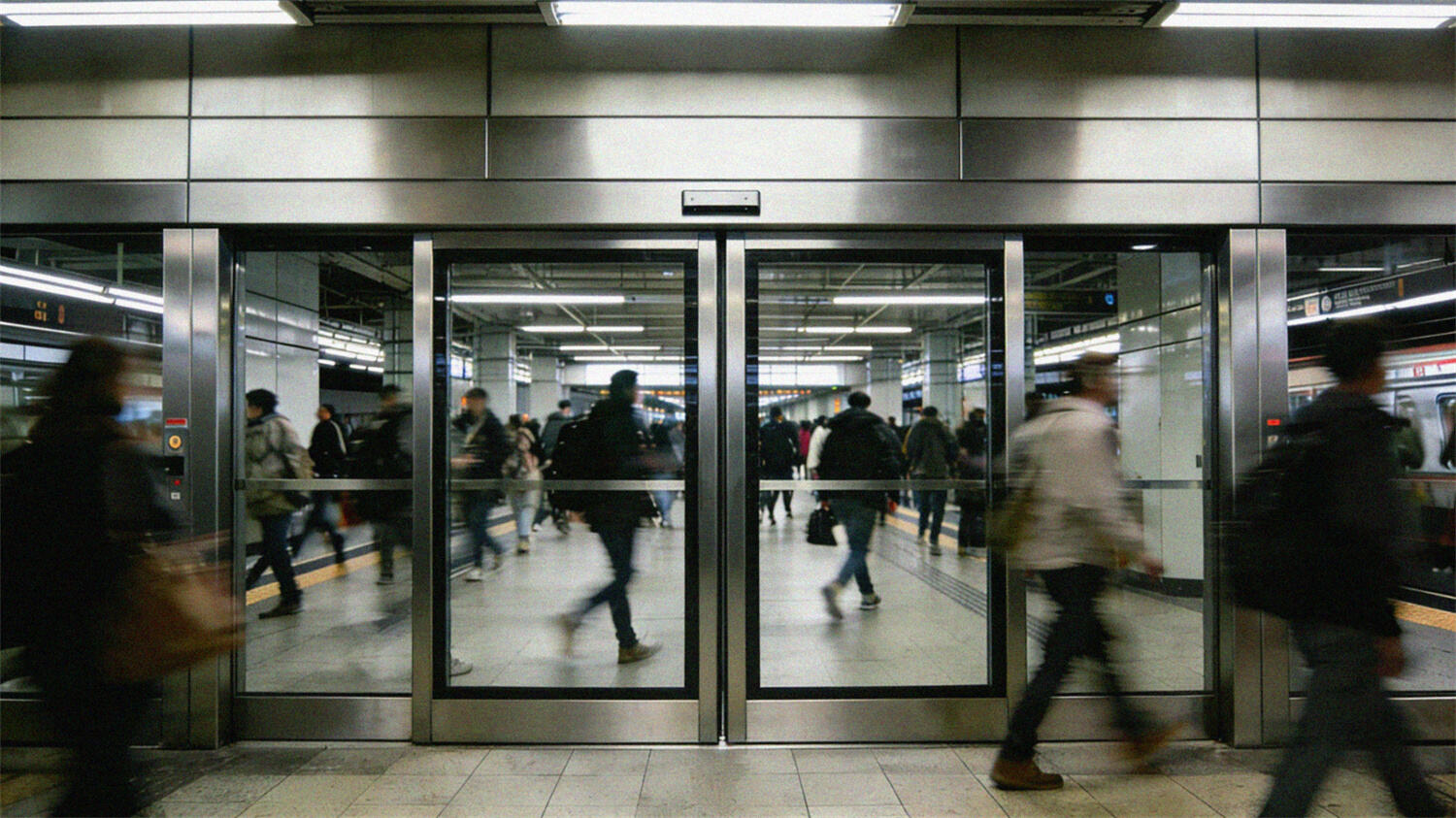
Real photo of a sliding automatic door in use at a Singapore MRT station passenger walkway. Actual passengers passing through the door. The equipment is installed in a real operational environment, not a render or illustration.
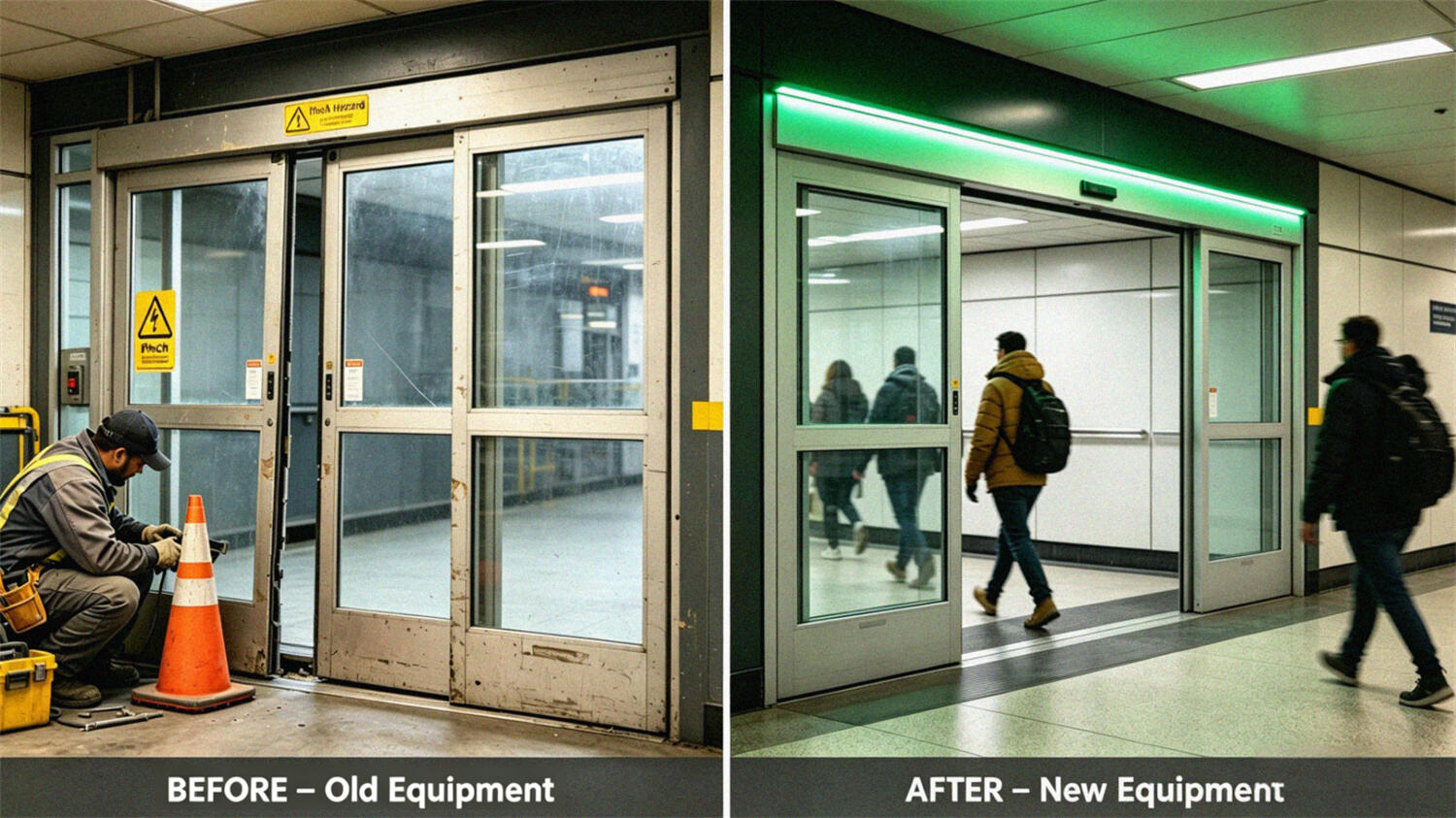
Before and after installation of sliding automatic door on passenger walkway in Singapore MRT station. Old equipment had frequent breakdowns and pinch hazard. New equipment provides stable operation and no frequent maintenance.
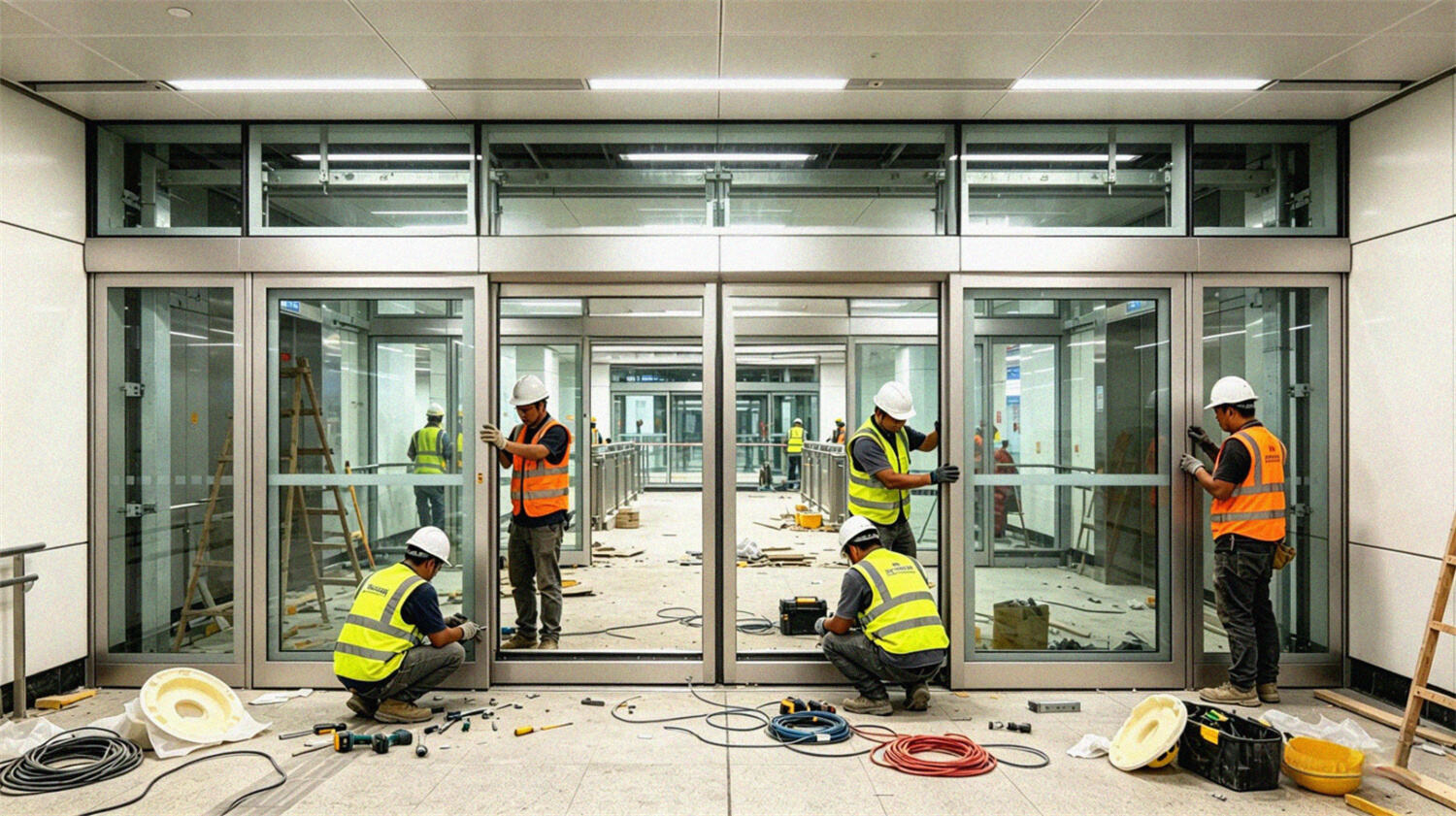
Real construction site photo of a sliding automatic door being installed in a Singapore MRT station passenger walkway. The door's glass panels, sliding mechanism, and rail system are clearly visible. Workers in safety gear are installing the equipment. Actual on-site photo, not a render or illustration.
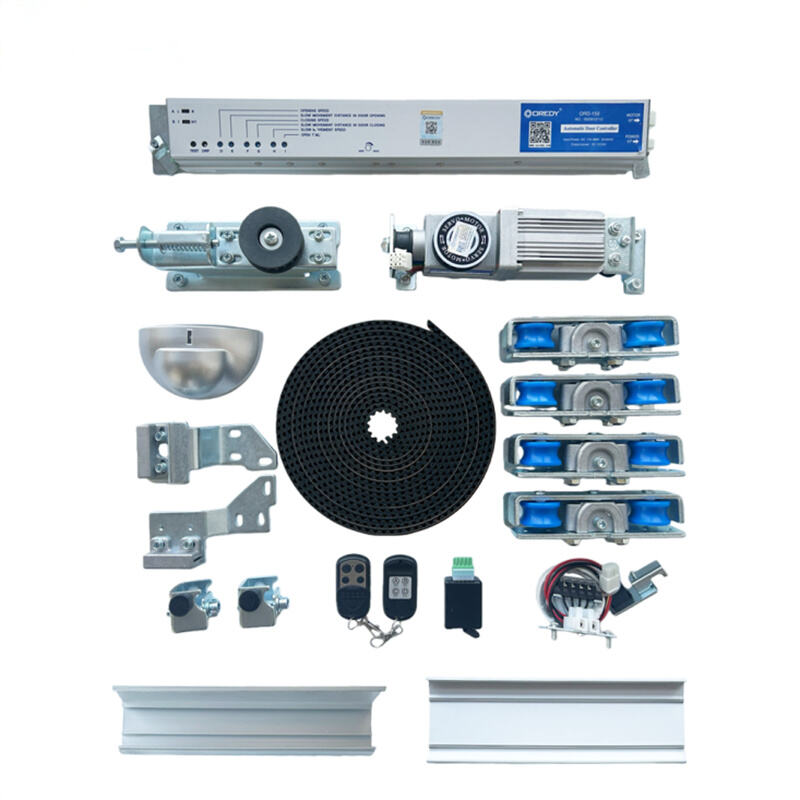
Real product photo of a sliding automatic door. The door consists of two glass panels with a horizontal sliding mechanism. Equipment shown unmounted, highlighting the door design, frame, and drive system. Actual product photography, not a render or diagram.
 20 Mar 2026
While the global automatic door industry's focus often remains on the mature markets of North America and Europe, the true engines of growth are accelerating in emerging markets such as Southeast Asia, Africa, and the Middle East. The Asia-Pacific re...
 19 Mar 2026
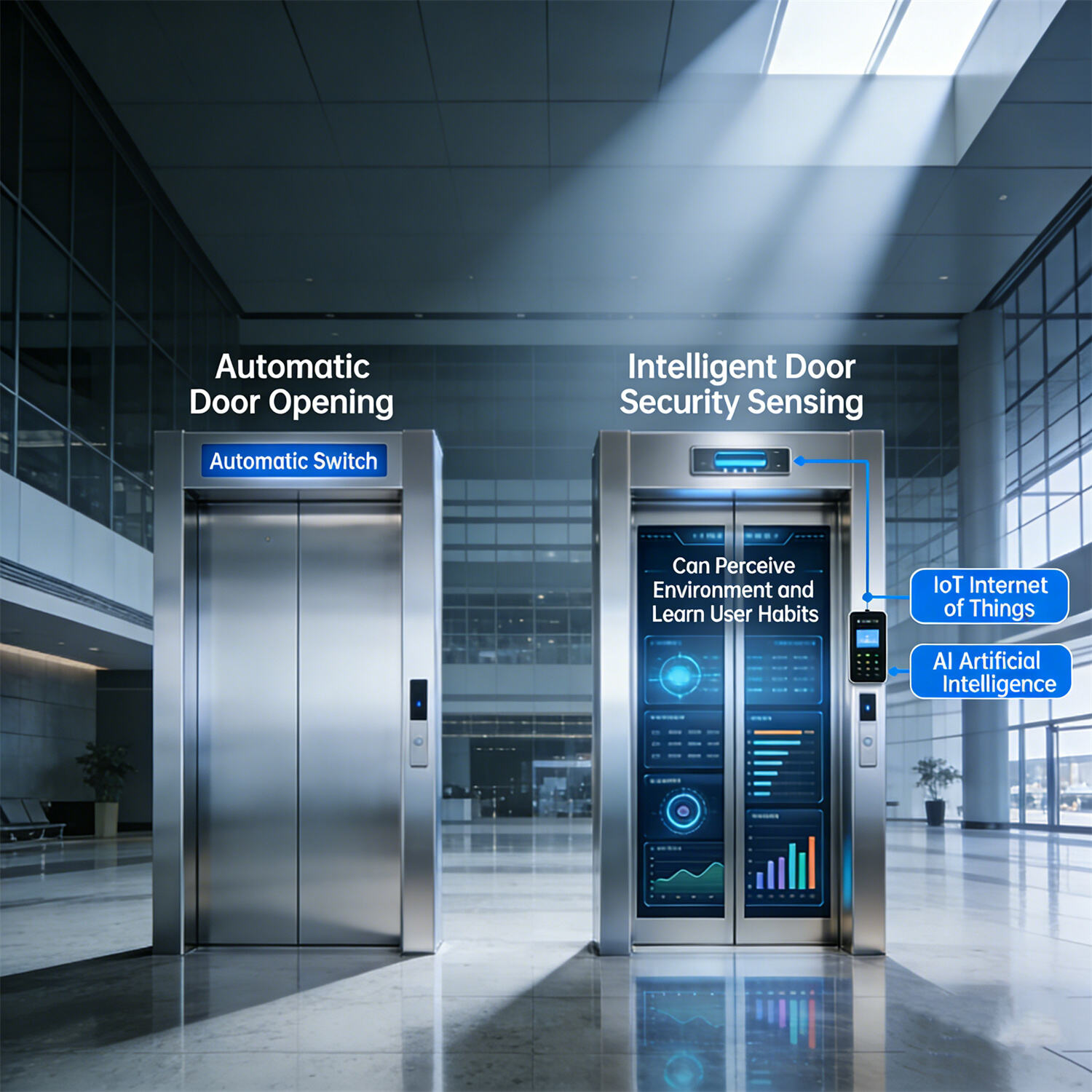
The automatic door technology is undergoing a profound transformation. Traditional automatic doors merely achieved the basic function of "automatic opening and closing", while the new generation of intelligent door control systems, through Internet o...
 18 Mar 2026
The global automatic door market is experiencing steady growth driven by technological innovation, urbanization, and heightened awareness of safety and hygiene. According to a recent report by Global Market Insights, the global automatic door market ...

 EN
EN